• This Forum is for adults 18 years of age or over. By continuing to use this Forum you are confirming that you are 18 or older. No content shall be viewed by any person under 18 in California.

Elk calibers

How is more ethical to shoot with a bow at 20 yards verses a rifle at 300. I can hold less them 2 inches at 400 yards. Killing is killing, whether its over a bait pile, with a dog, sitting in a blind, over decoys, out of a treestand, or glassing and shooting. Its just your opinion of what you feel is ethical.

Some guys cant hit a 10 inch plate at 50 yards and the next guy can hit one at 3 or 400 yards everytime. Which is more ethical? Matt
Yes sir my opinion. And yes killing is killing.
The OP'S question was about lighter/medium calibers. Somewhere in the thread folks start talking bout the need for larger overbore heavy calibers, to the point anything else is under powered.
So ask yourselves this.
What did people kill elk with before the magnums hit the scene? Hense why I mentioned the Indians and their equipment.
Or me and my desire to hunt with a bow.
My point is as stated. Good hard hunting and ethical shots.
Now back to the ass scratching bull @20.
Could I have shot the cow standing @18?
Sure. Would have it been ethically sound?
No. What happens to the bull standing behind the cow when and if arrow was to pass through?
Besides the fact I wasn't there to get a cow.

I never set out to question anybody's shooting ability.
But I do question caliber choices.
And I am a firm believer in delivering as much energy as possible.

My original post on this thread was why a different caliber for bulls vs cows.
We are talking bout the difference of a couple hundred pounds on the same species, not dangerous game.
 
Reading comprehension needs some work in this thread. No where have I read anyone say that any caliber or even a sharp stick cant kill an elk. What those experienced elk hunters are trying to get across is that elk are tougher than most other animals, have very tough shoulder bones on big bulls, and larger calibers will do the job when you hit those heavy bone when smaller calibers may fail. Making the argument that a cave man can kill an elk with a stick does not mean a 130 grain bullet will penetrate a bulls shoulder blade at 600 yards. So far as shot placement being important, that goes without saying, but most of us have made a less than perfect shot in the field. I think this topic gets emotional because most of us have seen some nasty stuff that a larger caliber would have prevented. No cartridge can fix a gut shot, but a bigger one can fix a shoulder shot.
 
Last edited:
Interesting, and lots of experience in this post.

For me, it's a pre-'64 M70 rebarreled to 338-06 Ackley shooting 210gr Partitions. I've learned over the years as Alex noted above, is that for big bulls, big bullets are much preferred over lighter, faster offerings. I've never lost a bull since shooting my ".34 Thumper". Elmer Keith had it right a long time ago.
 
Matt, as I have said in the past, I know and respect your accomplishments in benchrest! Could you explain the specifics and conditions you are referring to when you say “ I can hold less than 3 inches at 400 yards?”
I am talking with a good prop. My carry hunting gun is not factory. It is a 30-338 with a custom barrel. It is a good shooter and I worked on loads alot. I shoot 180 grain Ballistic tips. If not walking far, I use a 17 pound 308 Baer with 210 Bergers. Matt
 
Reading comprehension needs some work in this thread. No where have I read anyone say that any caliber or even a sharp stick cant kill an elk. What those experienced elk hunters are trying to get across is that elk are tougher than most other animals, have very tough shoulder bones on big bulls, and larger calibers will do the job when you hit those heavy bone when smaller calibers may fail. Making the argument that a cave man can kill an elk with a stick does not mean a 130 grain bullet will penetrate a bulls shoulder blade at 600 yards. So far as shot placement being important, that goes without saying, but most of us have made a less than perfect shot in the field. I think this topic gets emotional because most of us have seen some nasty stuff that a larger caliber would have prevented. No cartridge can fix a gut shot, but a bigger one can fix a shoulder shot.
It seems to me the physiological state of the animal is critical. Totally relaxed = DRT with any well placed shot with adequate cal and good bullet. Spooked = you better hit the CNS. Think high lung shot which is likely to frag the spinal cord. Poorly hit = massive Adrenaline dump =very difficult to deliberately hit the CNS on a running animal thus breaking it down becomes viable option. The speed with which follow up shots can be delivered is critical, the position seldom steady. You are now in shotgun mode, and the rifle needs to be balanced, the eye centering on the scope automatically. If the initial follow up shot fails and opportunity lost, you will likely need to sprint a few hundred yards at altitude, and shoot again at max heart rate. A hierarchy of ethics can be constructed. How much gun you can handle and shoot well in all these conditions is at the top, and assumes you are in top condition and have practiced from odd positions and on Movers. Leads and holdovers need to be automatic.
 
www.rmef.org

Read what they say about hunting elk.
Is that a good organization or more of a elite group that’s going to be bad for the regular hunter? I’m seriously asking. I went to the National Finals Rodeo in Vegas several years ago, RMEF had a big booth in the convention center. They were selling high dollar raffle tickets for different guns, kinda left a bad taste in my mouth.
 
It's all about shot placement.

For me and my immediate family (wife and 2 daughters) we've used the following.

.243. 4 cows 1 small bull
6.5 X55 2 cows
7mm-08 2 bulls
.30-06. 1 bull

Most were taken with Barnes X bullet a couple with Berger.

I'll add that we've also used a .243 and a 6.5X55 on Oryx without problems.
 
I am talking with a good prop. My carry hunting gun is not factory. It is a 30-338 with a custom barrel. It is a good shooter and I worked on loads alot. I shoot 180 grain Ballistic tips. If not walking far, I use a 17 pound 308 Baer with 210 Bergers. Matt
Oops, typo on that. You said 2 inches at 400 yards.

Read the warnings at the link below, I think we just started our 3rd season.

https://forecast.weather.gov/showsigwx.php?warnzone=COZ010&warncounty=COC037&firewxzone=COZ205&local_place1=Vail CO&product1=Hazardous+Weather+Outlook&lat=39.6453&lon=-106.3862

Just wondering what your hold would be in these weather conditions after climbing a modest 2000 feet in elevation and using a “good prop.”

My point is, elk “hunting conditions” are rarely “flatland eastern shooting conditions” and this rarely is taken into account in these discussions.
 
Just something to ponder

If you hunt elk with a 100gr .243 bullet and you shoot a 700 lb bull elk that is the equivalent of hunting a:
300 lb deer with a 43 gr bullet
25 lb coyote with a 3.6 gr. bullet
A 12 lb fox with a 1.7 gr bullet.

A bit on the small side no matter how you look at it.

Obviously it is not as easy as comparing body weight with bullet weight but most of you will get the point.

There are not that many small caliber bullets designed for large heavy game.

Parts of this thread are painful to read.
CW
 
Oops, typo on that. You said 2 inches at 400 yards.

Read the warnings at the link below, I think we just started our 3rd season.

https://forecast.weather.gov/showsigwx.php?warnzone=COZ010&warncounty=COC037&firewxzone=COZ205&local_place1=Vail CO&product1=Hazardous+Weather+Outlook&lat=39.6453&lon=-106.3862

Just wondering what your hold would be in these weather conditions after climbing a modest 2000 feet in elevation and using a “good prop.”

My point is, elk “hunting conditions” are rarely “flatland eastern shooting conditions” and this rarely is taken into account in these discussions.
Don’t worry about Matt, he is good to go.
CW
 
About 15 years ago I had a friend ask me to recommend a caliber for an elk rifle for his 15 year old son. The son had shot a bit, but not a lot, of high-power rifle, I recommended that he get him a 270 in whichever brand of rifle he liked best. The father took the son to a regional chain sporting goods store and proceeded to take the advice of the salesman who convinced him that it took at least a 300 magnum to kill an elk (it is doubtful that the salesman had ever shot an elk, but that is another story). The father bought the latest and greatest magnum - a 300 Ultra Magnum - by the time the rifle was sighted in the son was so recoil shy that he refused to go elk hunting and to this day has not shot another high-power rifle. There is no doubt in my mind that if the father would have purchased him a milder recoiling rifle we would probably have another elk hunter in our midst but the magnum fascination ruined that for him.

drover
 
Reading comprehension needs some work in this thread. No where have I read anyone say that any caliber or even a sharp stick cant kill an elk. What those experienced elk hunters are trying to get across is that elk are tougher than most other animals, have very tough shoulder bones on big bulls, and larger calibers will do the job when you hit those heavy bone when smaller calibers may fail. Making the argument that a cave man can kill an elk with a stick does not mean a 130 grain bullet will penetrate a bulls shoulder blade at 600 yards. So far as shot placement being important, that goes without saying, but most of us have made a less than perfect shot in the field. I think this topic gets emotional because most of us have seen some nasty stuff that a larger caliber would have prevented. No cartridge can fix a gut shot, but a bigger one can fix a shoulder shot.

I've read and heard varying estimates of energy required to kill (foot pounds) elk. The answer to most complex questions is usually shrouded by the ubiquitous "it depends". My question is assuming you are using a bullet of proper construction that holds together upon impact with bone how much energy would you need to get through that shoulder bone of a 600lb elk?
 
I've read and heard varying estimates of energy required to kill (foot pounds) elk. The answer to most complex questions is usually shrouded by the ubiquitous "it depends". My question is assuming you are using a bullet of proper construction that holds together upon impact with bone how much energy would you need to get through that shoulder bone of a 600lb elk?
1200 foot pounds of energy is the norm for elk. You want to avoid that big bone if at all possible.
 
I'm sorry but that does not answer my question.
It depends on impact velocity. There is more to it than energy alone.
I'm sorry but that does not answer my question.
There is more to it than energy alone. Impact velocity plays a big part in impact energy. This is why PO Ackley was a big fan of smaller and faster calibers for hunting in North America. The smaller diameter encounters much less friction to penetrate.
 
Last edited:
It depends on impact velocity. There is more to it than energy alone.

There is more to it than energy alone. Impact velocity plays a big part in impact energy. This is why PO Ackley was a big fan of smaller and faster calibers for hunting in North America.
You might want to refer to the Killing Power chapter of Ackley’s book where Paul Von Rosenberg states “In fact, I will go so far as to argue that velocity, per se, has absolutely nothing to do with wounding capability!”

Of course, velocity plays a role in the calculation of energy, but that is the extent of its consideration. Energy kills not velocity.
 
I've read and heard varying estimates of energy required to kill (foot pounds) elk. The answer to most complex questions is usually shrouded by the ubiquitous "it depends". My question is assuming you are using a bullet of proper construction that holds together upon impact with bone how much energy would you need to get through that shoulder bone of a 600lb elk?
The easiest answer is not to shoot em in the shoulder.
And the easiest way to not hit that shoulder is get closer.
Think about it, your humping up n down mountains with an extra 25lbs of gear.
Hunting pack, rifle, binoculars, range finder.
Now let's add in the effects on your body. Fatigue, lactic acid in your muscles, adrenaline coursing through your veins.
And the excitement of the shot opportunity.
Yeah you can use a heavy magnum to try n compensate for all those outside influences but that's just stupid IMHO.
Remember we are responsible for every bullet we fire, including the ones at animals.
Elk are majestic creatures and deserve to be treated as such.
So if the sport your in is long range killing, stick to prairie dogs.
So in conclusion I may never kill n elk, because I refuse to take less than optimal shots, or use a rifle that beats the shit outta me. Hunt hard, get close, kill clean.
If that's to much to ask, stay home!
 
Last edited:
5F9F9CFB-9597-460C-B398-B8584BE9B045.jpeg
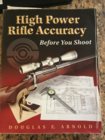
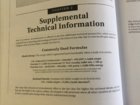
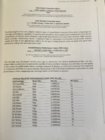
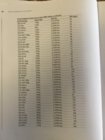
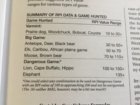
This dandy book from Mr Arnold has a relative performance index listed on pages 83-84. I highly recommend this work to all hunters, it really has great information and a useful load development section for hunting rifles. He references John Taylor’s “Knockout Blow” and John Wootter’s “Leathality Index”. Mr Arnold uses the “Arnold Performance Index” (RPI) values to compare cartridges for different species.

36CF4DD2-7015-4DEE-8110-F8ED38A0B6EA.jpeg


5F23C70F-1D49-4BDC-80DF-072BAD7AEFF5.jpeg

85672B19-D186-4A43-91DC-5D647F097748.jpeg

8EC6A6AF-972D-407B-B972-1CBC40EE0043.jpeg


This is good stuff and as you can tell, several folks who know a bit more than most of us about this subject have put a lot of energy into developing a way to compare cartridges and target game species.
CW

Edited to include link below

https://www.amazon.com/dp/0883173212/?tag=accuratescom-20
 
You might want to refer to the Killing Power chapter of Ackley’s book where Paul Von Rosenberg states “In fact, I will go so far as to argue that velocity, per se, has absolutely nothing to do with wounding capability!”

Of course, velocity plays a role in the calculation of energy, but that is the extent of its consideration. Energy kills not velocity.
With penetration, in any type of material, energy is not a predictor. Velocity and bullet construction are the predictor. Quoting energy work well for comparing different loads. The problem with measuring wound potential cannot be done with energy. After all, Newton's law describes forces, not energy, and velocity the important aspect because it drives the bullet. We've come a long way with modern bullets and their construction. A faster and smaller diameter bullet penetrate easier and deeper when impact velocity is equal to a larger diameter bullet. Times and bullet construction has changed. This isn't the 1950's.
 
Practice in the summer shooting and you will know your comfort zone. Everyone’s is different, shoot from different positions like off your pack from the ground and not all from a bench then you will have a better understanding of YOUR level of accuracy and at what distance you are comfortable with taking a shot. Shoot in the wind and messy conditions as well. Shot placement trumps all else so be honest with yourself. I can cold bore steel at 1000 on my range at times but I’m not comfortable taking that shot on animals even though my caliber will carry the energy. Practice. Troy
 

Upgrades & Donations

This Forum's expenses are primarily paid by member contributions. You can upgrade your Forum membership in seconds. Gold and Silver members get unlimited FREE classifieds for one year. Gold members can upload custom avatars.


Click Upgrade Membership Button ABOVE to get Gold or Silver Status.

You can also donate any amount, large or small, with the button below. Include your Forum Name in the PayPal Notes field.


To DONATE by CHECK, or make a recurring donation, CLICK HERE to learn how.

Forum statistics

Threads
168,086
Messages
2,246,678
Members
80,965
Latest member
Blados33
Back
Top