• This Forum is for adults 18 years of age or over. By continuing to use this Forum you are confirming that you are 18 or older. No content shall be viewed by any person under 18 in California.

Got brass troubles. Cause ? Video posted

Yes, consult Bradley first.
fyi -Wilson has honed a tiny off their dies for me at zero cost beyond shipping three fired cases, they also share sizing numbers.

Hope this helps, have a great day..
Sweet. Maybe @urbanrifleman can help me. If not I’ll contact Wilson. Thank you much spj
 
If you decide to trash any of those dies or barrels for that matter, I'll take them.

These guys on here have you running in 100 different directions. 99 of them are going to end up being wrong.

My 2 cents (and it might not be worth that) is a brass problem, which I think was mentioned on the first page. As Webster posted, with the video, brass separates when stretched lengthwise. Lets assume (yeah, I know, u + me) the brass is thin at the top half of the body, or overannealed or metalurgically different. When fired, this part of the brass is the first to expand and adher to the chamber wall, even before the rest of the body. This would allow stretching in the center of the case, rather at the head, where separations usually occur. Since it is streching at the thinner middle area of the case and not the thick case head area, it is separating earlier in the life of the case.

I doubt Starline will do anything for you after 4 or 5 firings on the brass, but I sure would send them some samples and put their feet to the fire that they have a problem they need to address.

Or, I could be wrong like the other 99...it wouldn't be the first time!LOL
 
I believe the problem has been identified as the brass is being repeatedly stretched and compressed by the dies the OP has. I suspected this might be the case and that's why I suggested making a chamber cast to check the chamber dimensions, but I think the OP got there just the same.

Until the chamber and sizing die dimensions are identified it's premature to blame the brass.

And I could be one of the 99% also.
 
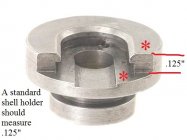
Does the shell holder have the correct deck height?
It appears that the problem lies in the difference in the chamber wall diameter and the diameter to which the die/dies are resizing the fired cases to. The cartridge base to datum line measuring is fine at .002" short. What appears to be happening is that every time the case is resized then fired, the case wall is getting expanded ~ .005" - .007". It is eventually failing where it is because that is where the case wall of the brass transition to the cartridge head begins. The brass starts to get thicker right there.

Or at least that's what it looks like to me.
 
It appears that the problem lies in the difference in the chamber wall diameter and the diameter to which the die/dies are resizing the fired cases to. The cartridge base to datum line measuring is fine at .002" short. What appears to be happening is that every time the case is resized then fired, the case wall is getting expanded ~ .005" - .007". It is eventually failing where it is because that is where the case wall of the brass transition to the cartridge head begins. The brass starts to get thicker right there.

Or at least that's what it looks like to me.
If that were the case, the neck of the brass would seperate on every reload ever made for factory guns where the case mouth opens up more than that every load cycle. Separation occurs when the length is off or over worked. The chamber stops the brass from stretching side to side. C'mon guys. Even if it sized it down 8 thou too small at the shoulder, that's only 4 thou a side. The case mouth can be worked 10 thou with a factory gun and off the shelf dies and still get more than four loads....
Dan
 
If that were the case, the neck of the brass would seperate on every reload ever made for factory guns where the case mouth opens up more than that every load cycle. Separation occurs when the length is off or over worked. The chamber stops the brass from stretching side to side. C'mon guys. Even if it sized it down 8 thou too small at the shoulder, that's only 4 thou a side. The case mouth can be worked 10 thou with a factory gun and off the shelf dies and still get more than four loads....
Dan
Necks are annealed. Case bodies are not.

C'mon.
 
Obviously we aren't going to agree about this.

Good shootin' to you.
I've looked at this from all angles. I believe this is a brass manufacturing problem. When the weather gets nicer, I may end up pulling 10 brass out of my stash and just see how many loads I can get off my bulk 223 Starline and report back.

Even better shootin' to you sir ; )

Dan
 
I’m not qualified to speak on the 223 Wylde other than what I’ve googled. There is a couple thousand difference in shoulder dimensions.
Wylde -.357
REM -.355
Should a person use a Remington die on a Wylde chamber ?
I got to email back a forth a small amount with Wilson They said their 223 rem dies would not help me
 
Any reason you don't confront the barrel manufacture about the oversize chamber? It's been known to happen. Some more than others.
 
Any reason you don't confront the barrel manufacture about the oversize chamber? It's been known to happen. Some more than others.
As @SPJ posted. I’d say my brass and chamber is on par with the prints. I know brass has to spring back a little I would think, not sure on how much but the 223 wylde shows .3572 my fired brass measures .356 - .357 I did speak with the barrel maker about his thoughts on the matter. He said I was running a hot load, and that a cci 450 would hide pressure. He also said bad brass is out there and also that 4-5 firings under those conditions it could happen with sub par brass. If it continues this trend. I will not have anymore wylde chamberings in a bolt gun
 
View attachment 1423069View attachment 1423070

I had a case separate today which was a first. It’s starline brass bumped back 2-3 thou depending on what day it is, and this was the 4th firing. Many out of the 100 I started with shows a faint line outside on the body where it snapped. Anyways I anneal after every firing. 223 cases. I have seen ( not through personal experiences) the case head separate from over sizing and I have had split necks and I have had primers get blown out but not so much this. Helps. +++EDIT+++ I’ll also add I can not feel anything inside the cases where the line is forming with a paper clip. 94 out of the 100 has the obvious line around the outside of the case. 6 doesn’tView attachment 1423205
186 replies. I might as well add one. After looking at the video by F class John he states that case seperation is related to to much head space. Custom dies only makes the case diameters fit your chamber better. Honing only increases the die diameter. The problem is related to to much head space and not case wall fitting the chamber better. Assume that firing the cartidge once and it's a little tight to extract, you adjust your die to bump 2 thou. the bolt closes OK. You fire the case a second time and the bump measurement shows the case grew 4 thou increase in length from the length after the 1st. firing. It was not completly FF after the 1st firing. You size the case with the original die adjustment you now have about 4-5 thou space because the die needs to be adjusted for bump on the new case length not the first one. Watch F Class John's video. In his exampple he gets 7 thou space because you need to check and adjust the die after the 1st, 2nd and maybe the 3rd firing. The case seperation is cased by stretching lengthwise due to abnormal space longitudinaly. Die diameters are not a factor. With F class John's 100 case batch not all cases showed a ring at mid length.
 
Last edited:
186 replies. I might as well add one. After looking at the video by F class John he states that case seperation is related to to much head space. Custom dies only makes the case diameters fit your chamber better. Honing only increases the die diameter. The problem is related to to much head space and not case wall fitting the chamber better. Assume that firing the cartidge once and it's a little tight to extract, you adjust your die to bump 2 thou. the bolt closes OK. You fire the case a second time and the bump measurement shows the case grew 4 thou increase in length from the length after the 1st. firing. It was not completly FF after the 1st firing. You size the case with the original die adjustment you now have about 4-5 thou space because the die needs to be adjusted for bump on the new case length not the first one. Watch F Class John's video. In his exampple he gets 7 thou space because you need to check and adjust the die after the 1st, 2nd and maybe the 3rd firing. The case seperation is cased by stretching lengthwise due to abnormal space longitudinaly. Die diameters are not a factor. With F class John's 100 case batch not all cases showed a ring at mid length.
Good thoughts but I have did that. I set the die up after 3 firings. As I have stated a coulple times at .450 I get resistance during bolt close at .449 .448 I don’t. Have been out of options as far as setting up my die. And yes on this next brass run I’m going to go over my die setup again, again , and again to make sure I have my bump set correctly. Just like I have with this gun and every other rifle I reload for.
 
You can get more opinions on what is the cause ad infinitum, If it were me I'd get some cerosafe and do a chamber cast, then get on the phone with the gunsmith or barrel company and demand they make it right. It is not your fault, standard SAAMI dies should work to the point they give a reasonable number of brass cycles (more than 4) irregardless if it's a Wylde chamber. Brass typically shrinks a thou from chamber dimensions after firing. Do a search here on oversize chambers and you'll find many barrel makers are reluctant to offer to inspect or replace a barrel. Tell them them you have tried everything suggested on the accurate shooter website and still have problems. They don't like bad publicity.
 
For calibers you are dedicated to, it is good to own at least the Go-Gage.

With the gage and some tape on the base, you can get a pretty good measure of your rifle's headspace dimension to within the thickness of the tape steps.

Gages are more rigid than brass cases, so you get a pretty good answer without necessarily stripping the bolt, but you can if you want to.

Then, you can use that gage w/tape to reference your Hornady tools to see how virgin or cycled brass compares and to get a much clearer picture of how much you are really bumping.

This doesn't answer all the questions in this thread, but it takes the lengths of the shoulder bump off the table. That still leaves us with diameters and the brass, but at least the bump question is eliminated.

I was surprised that more folks who reload don't own the Go-Gage for their favorite cartridges. They are certainly used by gunsmiths, but have as many uses for reloaders as they do for setting up chambers.

Now for the question of what is causing the OP's issues... If the shoulder bump is taken off the table, and there isn't a huge difference between the chamber diameters and the sizing die, then it would be time to do a fine survey of the brass hardness values, with an emphasis right near the break.

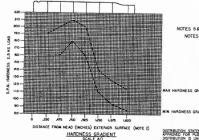
A few samples of virgin, a few samples of brass with two cycles, and a few samples of ones that are either broken or ready to break, and we would have the answers. Here is an example of the values for "normal" mil-spec 556 brass hardness values.

View attachment 1424188

Looks like the transition from hard to soft starts at mid-length and could explain case separation at case body mid-length. This is the first data I have seen to most likely explain mid length speration. TThere has to be a reason for it! The higher hardness would resist stretching and the softer region would stretch easier causing seperation to occur at mid length on every case. Don't know where the VHN data came from but you cannot use 2.5 Kg load on thin sheet metal. 500 gram load is almost the universal load frequired by spec. on all Vickers hardness testing . A 2.5 Kg load would bury the indenter in brass. I performed micro hardness testing at a research center for 47 years. All our testing was to an official spec. The numbers do look very realistic and I believe them.
 
Don't know where the VHN data came from but you cannot use 2.5 Kg load on thin sheet metal. 500 gram load is almost the universal load frequired by spec. on all Vickers hardness testing . A 2.5 Kg load would bury the indenter in brass. I performed micro hardness testing at a research center for 47 years. All our testing was to an official spec. The numbers do look very realistic and I believe them.
I agree. I never ran the force that high either.
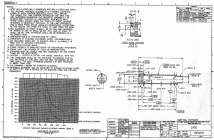
I lifted that version from a modern report, that lifted it from the original specification drawings for the M855. You will see it in the lower left hand corner of the drawings.

1680120358145.png
1680120440644.png

It is in the original drawing that keeps going down the road and non of us pay attention to it. Like you, I used anywhere from 100 to 1000 grams depending on the study, lower on the cross sections of the necks and bodies, and higher on the case heads.

XRD would be informative if there were any extraordinary residual stress issues, but for X-Ray Diffraction you would need a bigger credit card. With a little time in the lab, it would be easy to tell if there was anything out of place without a lot of trouble, but easy in the labs doesn't mean cheap.

The only "cheap" option for the OP would be to get lots of cycles on a different brand or lot of brass and see what happens.
 
Sorry for late reply. Post 72 pictures clearly show a difference in interior polish at the separation area . Did anyone else see that .
I skimmed the 10 pages so sorry if its already been discussed.
Gary
 
Sorry for late reply. Post 72 pictures clearly show a difference in interior polish at the separation area . Did anyone else see that .
I skimmed the 10 pages so sorry if its already been discussed.
Gary
I did and commented on it but I don't know if there's any significance to it?
 

Upgrades & Donations

This Forum's expenses are primarily paid by member contributions. You can upgrade your Forum membership in seconds. Gold and Silver members get unlimited FREE classifieds for one year. Gold members can upload custom avatars.


Click Upgrade Membership Button ABOVE to get Gold or Silver Status.

You can also donate any amount, large or small, with the button below. Include your Forum Name in the PayPal Notes field.


To DONATE by CHECK, or make a recurring donation, CLICK HERE to learn how.

Forum statistics

Threads
167,614
Messages
2,236,970
Members
80,628
Latest member
RSH89506
Back
Top