Follow along with the video below to see how to install our site as a web app on your home screen.
Note: This feature may not be available in some browsers.
This Forum is for adults 18 years of age or over. By continuing to use this Forum you are confirming that you are 18 or older. No content shall be viewed by any person under 18 in California.
This is the best thread on this subject that I have seen yet.
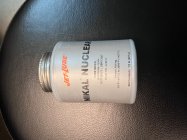
I put my first shouldered barrel on the other night. I used the Jet-Lube product that Jackie had recommended, put it real light on barrel and receiver threads with a cotton swab. Put a little super lube clear grease on outside of recoil lug where the shoulder of barrels meets and did the 80 pound of torque. All seemed to go well without any extra grease leaving.
Once the bbl is hand tight , install a witness mark across a point on the action/ bbl joint. Start applying torque, the marks will stop moving away from each other around 60 ft/ lbs. no need to go tighter than that.
Something that hasn't been stated so far is lube on the threads. I use the green grease that Kelblys sends with their actions. I put a thin line on the threads every 120*. I'll then hand tighten the bbl. to evenly distribute the grease. Then give it two uggas and call it good. Not only have I never had on shoot loose, I've never had trouble removing it when it was time.
I hope this helps,
FWIIW: I have seen it stated that torque is only a friction measurement of the threads and any mating surfaces that represents the clamping force. The use of a lube on the threads and/or mating surfaces results in the requirement of 20% less torque to realize the same clamping force as if it were not lubed. Might be a concern with a small bolt or screw, don't think there is any chance of damaging the barrel threads by hand torquing. LOL
FWIW, I've witnessed several BR guns pick right up after the barrels were removed, the threads lubricated and then retightened. None of them seemed 'loose' when removed...but obviously something changed for the better.
I've noticed that on barrels tightened aggressively, they need considerably more horse radish to break loose than what you tightened them to.
The mid range tightened ones seem to need only as much to break them loose, as what was used to tighten them.
Then you think about barrel twist direction and realize that it's more about thread loading/stretch than torque numbers. To a point, anyway? Or not?
Not sure if this is part of your question but since the Vaughn RAF book came out I've kept this on my radar. I've played with the ramp thread form (quit that at least for now) and barrel torque over the years. I can't say that it has made much of a difference at all in what I do and the cartridges I use. I do try to turn the cleanest threads I can and the cleanest mating surfaces that I can. On field rifles I aim for 90-100 ft lbs. Beyond 100 ft lbs things start getting difficult to hold especially with fluted barrels with short tenon’s that you have to grab on the taper. I've F-ed up fluted Cerkoted barrels by getting too agressive with torque and had them slip in the vise I don't think there are any negatives and only positives with higher torque values and the best threads and mating surfaces you can do. In my mind it eliminates variables. Take it FWIW Gunwerks has said that they have seen or tested better accuracy out of large magnums with as perfect as possible CNC'd threads and mating surfaces with high torque values. With lower torque values, imperfect threads and mating surfaces they say there can be or there is movement in the joint leading to inaccuracies. I'll just take his word for it. Maybe Wheeler can comment since he's done a lot of large cartridges.
Same here. Pretty much every barrel I've done lately is fluted so you get pretty good at timing them and knowing how much they will advance with certain torque values. Different thread pitches will pull up and advance differently with an equal torque value. I keep notes on the different pitches within a torque window so I can time the flutes predictably. Once done I engrave a BDC mark on the tenon for the future if it has to come off for some reason to make it easier to re-time it when it goes back on.
If the action face and barrel shoulder are square and the tennon thread's are the correct fit.you don't need alot of torque to hold them together.snap them together by hand then try undoing them the same way.70 lbs-ft is more than enough.tightening a barrel with a scaffold pipe on your action wrench and stretching-induced stress on tennon and action doesn't gain you anything.keep everything stress free..including the bedding.
I'm still on a data collecting mission and testing with various lubricants. As I try different ones it's often easy to see differences in the barrel take up/rotation on tightening and subsequent removal effort with some of them.
If the action face and barrel shoulder are square and the tennon thread's are the correct fit.you don't need alot of torque to hold them together.snap them together by hand then try undoing them the same way.70 lbs-ft is more than enough.tightening a barrel with a scaffold pipe on your action wrench and stretching-induced stress on tennon and action doesn't gain you anything.keep everything stress free..including the bedding.
My wish is every shooter I compete against next year just “snaps” the barrel on with a quick twist.
I have cured more than one ill shooting Benchrest Rifle by doing nothing more than tightening the barrel in a prescribed manner.
A proper threaded joint needs to be placed in some degree of tension to avoid any shifting of the barrel/action joint. The only argument is how much.
As I try different ones it's often easy to see differences in the barrel take up/rotation on tightening and subsequent removal effort with some of them.
The most pronounced example of that I've seen is with Lucas Red 'N Tacky. It's a very good EP lube and we use a it lot at the race shop. Great product, but I've stopped using it on barrels due to the excessive removal force needed.
The marine grade non metallic anti seize that Jackie has mentioned looks interesting.
I use 50ish ft lbs on my little cartridges unless the barrel is very heavy.
On 3006 sized cartridges or short mags or heavier barrels 80ish.
On bigger magnums like 338 lapua I use 100ish or more.
This Forum's expenses are primarily paid by member contributions. You can upgrade your Forum membership in seconds. Gold and Silver members get unlimited FREE classifieds for one year. Gold members can upload custom avatars.



 -Al
-Al
 I don't think there are any negatives and only positives with higher torque values and the best threads and mating surfaces you can do. In my mind it eliminates variables. Take it FWIW Gunwerks has said that they have seen or tested better accuracy out of large magnums with as perfect as possible CNC'd threads and mating surfaces with high torque values. With lower torque values, imperfect threads and mating surfaces they say there can be or there is movement in the joint leading to inaccuracies. I'll just take his word for it. Maybe Wheeler can comment since he's done a lot of large cartridges.