Nice.I also lived in hurricane country once. So solar and wind was out of the question. I would assume tornado country would be the same thing.
I built a solid concrete bomb proof gen room and put in the smallest genset I could use to power my entire house. It had a 5 ton cental a/c and I installed a giant quick start capacitor in it so my puny 7.5kw Northern Lights - Kubota could start it. My system was fully manual and it sipped fuel. Can't remember the rate but it was so low it was not an issue. I was able to keep all my treated fuel in 5 gal plastic cans so I could rotate them by using in my diesel vehicle. It worked great and was a lifetime system. The cheap part of the project was the cost of the generator. If I had to do it again out of hurricane zone I would still go diesel. And of course always have a Honda 2000 for backup. You can back feed it into your house and run everything selectively. Thats what I do now. View attachment 1634776View attachment 1634777View attachment 1634778
True, but your choice.Leaking diesel is not a concern. It's flash point is five times higher than gasoline. And five times harder to clean off my garage floor also.![]()
Thx. Back then I lived in a world where the KISS system ruled!Great looking setup and some good engineering involved also.
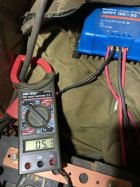
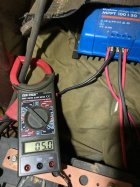
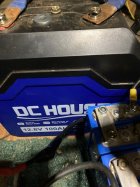
I took a couple pics of the clamp meter reading on one 12 v DC leg coming from the battery bank going to Inverter showing it hovering between 5.0 and 5.1 AmpsHopefully you had a hall-effect clamp on or it won't read DC amperage. LiFEPO4 12 volt batteries need a special charger that outputs at least 14.2-14.4 volts. A regular lead acid charger will never charge them correctly. If you have a solar charger, you need to change the profile to LiFePO4 or they won't charge correctly. When they are fully charged, they'll be a little over 13.8 volts. A lot of the LiFePO4 batteries BMS (battery management system) has a bluetooth interface and you can monitor with an app on your phone.