• This Forum is for adults 18 years of age or over. By continuing to use this Forum you are confirming that you are 18 or older. No content shall be viewed by any person under 18 in California.

First Remington 700 build. Do nothing at all, true the face or full blueprint?

Explain please? That would change headspace and be a pain to get all the lapping compound out with the barrel torqued on.

I want the weight of the barrel and the action situated the way it's going to be fired when I lap. And you're maybe changing headspace by a tenth... maybe. doesn't matter.
 
Check the lug contact with a red sharpie (rifle assembled) before you lap/cut and see if you actually need to do anything. The new remingtons are pretty good.
 
I want the weight of the barrel and the action situated the way it's going to be fired when I lap. And you're maybe changing headspace by a tenth... maybe. doesn't matter.
Trying to follow you here.
If the receiver is properly bedded (no stress), how does the weight of the barrel hanging off the receiver ring affect lug/abutment contact? Then how do you check progress- lap a little bit, pull the action from the stock, pull the barrel, clean out the abrasive from inside the receiver, re-install the barrel, re-install into the stock, blue and check contact- lather, rinse, repeat?

I'm confoozed...
 
No stress between the stock and the receiver, sure. But there will be stress and possible movement between the barrel and receiver. So by assembling the barrel and receiver into the stock, you should be replicating how the rifle will be when shot.
 
What Dave said. I want it in situ, barrel, trigger, etc. Maybe it's overkill? Just how I want to do it.

You don't need to take it apart to clean it. Get q-tips that are on hollow plastic stems, snip the cotton part off the end and stick it on a right angle pick. Now you can clean lugs on any gun including AR's for less than 1 total dollar invested.
 
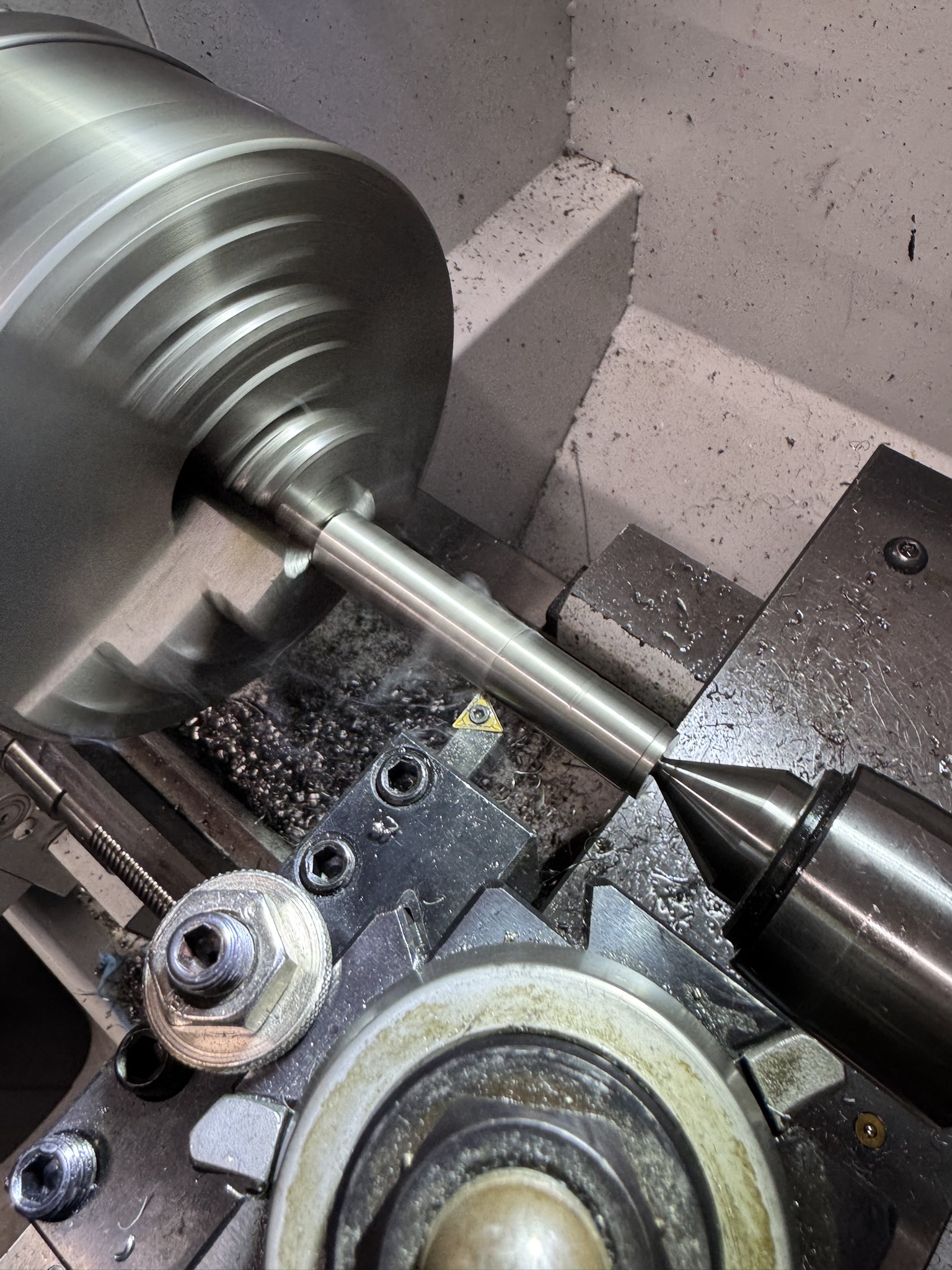
I turned a bolt body holder to check the bolt lug runout. Started off with a piece of scrap steel and turned it down to a 1/2" diameter, then chucked it in a collet and threaded it.
7jlFjEl.jpeg


j5subyq.jpeg


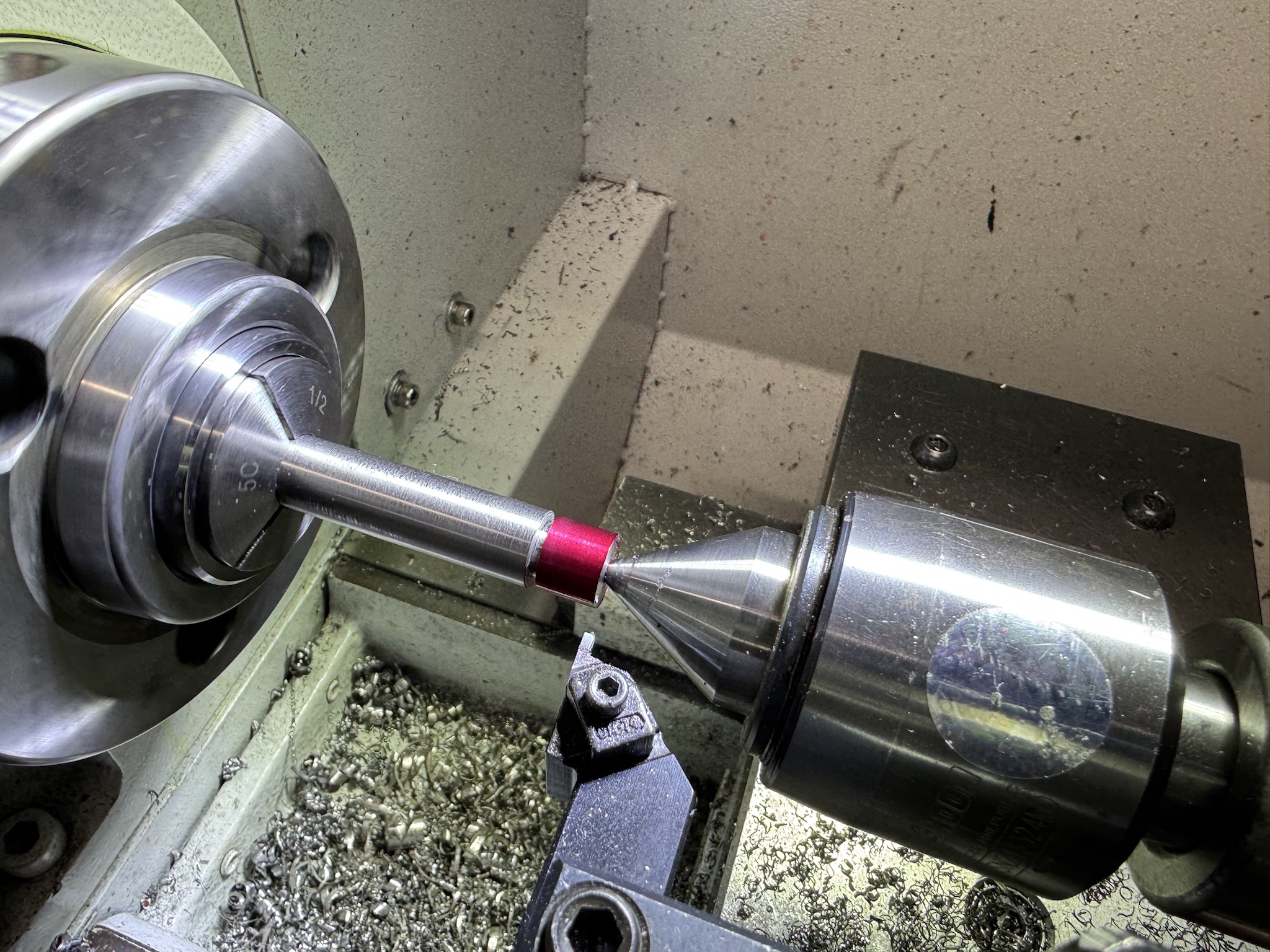
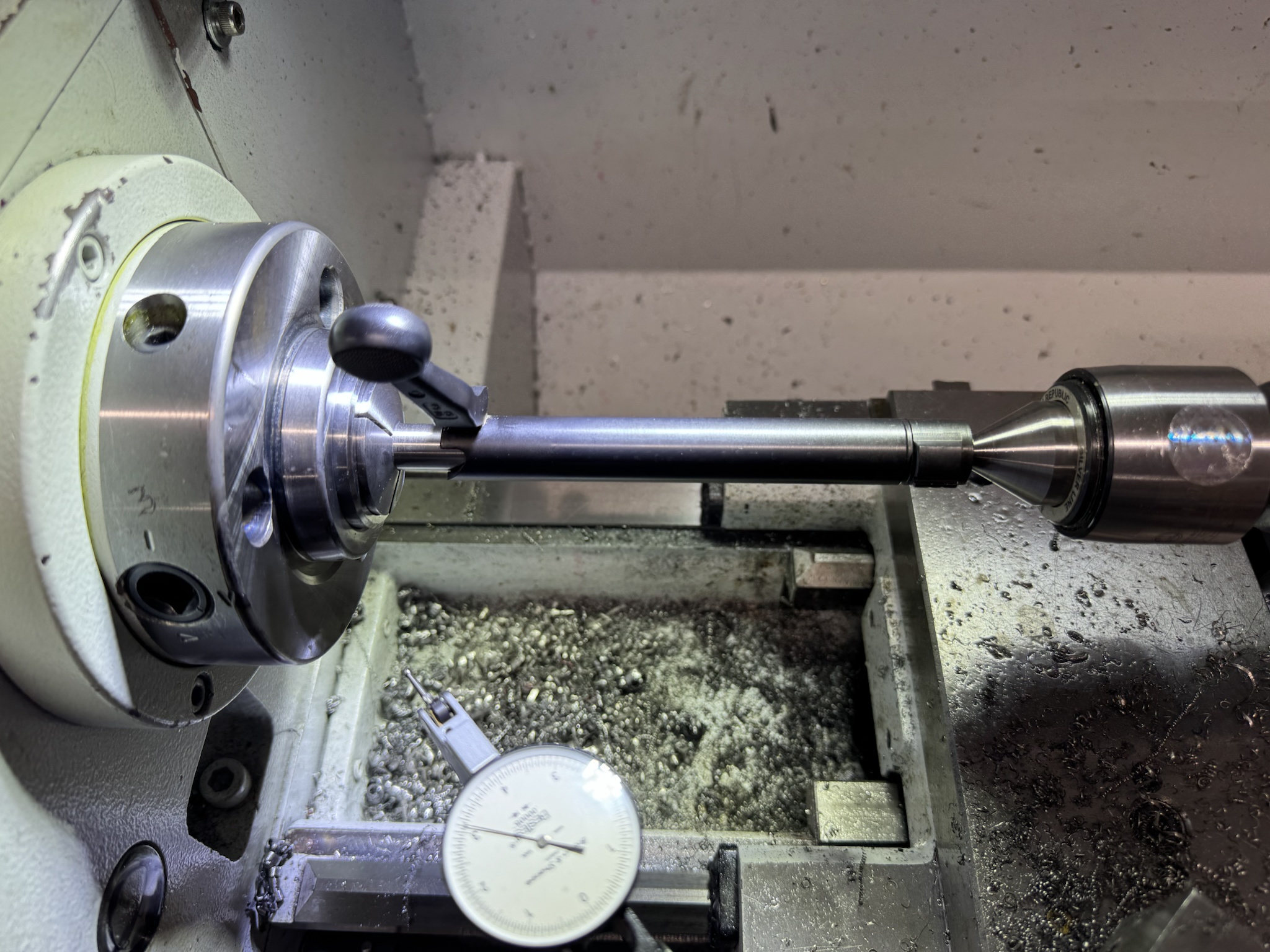
I put my live center gently in the firing pin hole and checked the lugs. They were within about 0.0005" of each other.
PAyAzdW.jpeg


Although I did check the bolt body and the handle end had about 0.008 runout and the body behind the lugs and at the nose had about 0.004" runout. is this typical? Do I pay attention to the body runout?

After using my jig, I think I should have made it with a shoulder. I might make another.

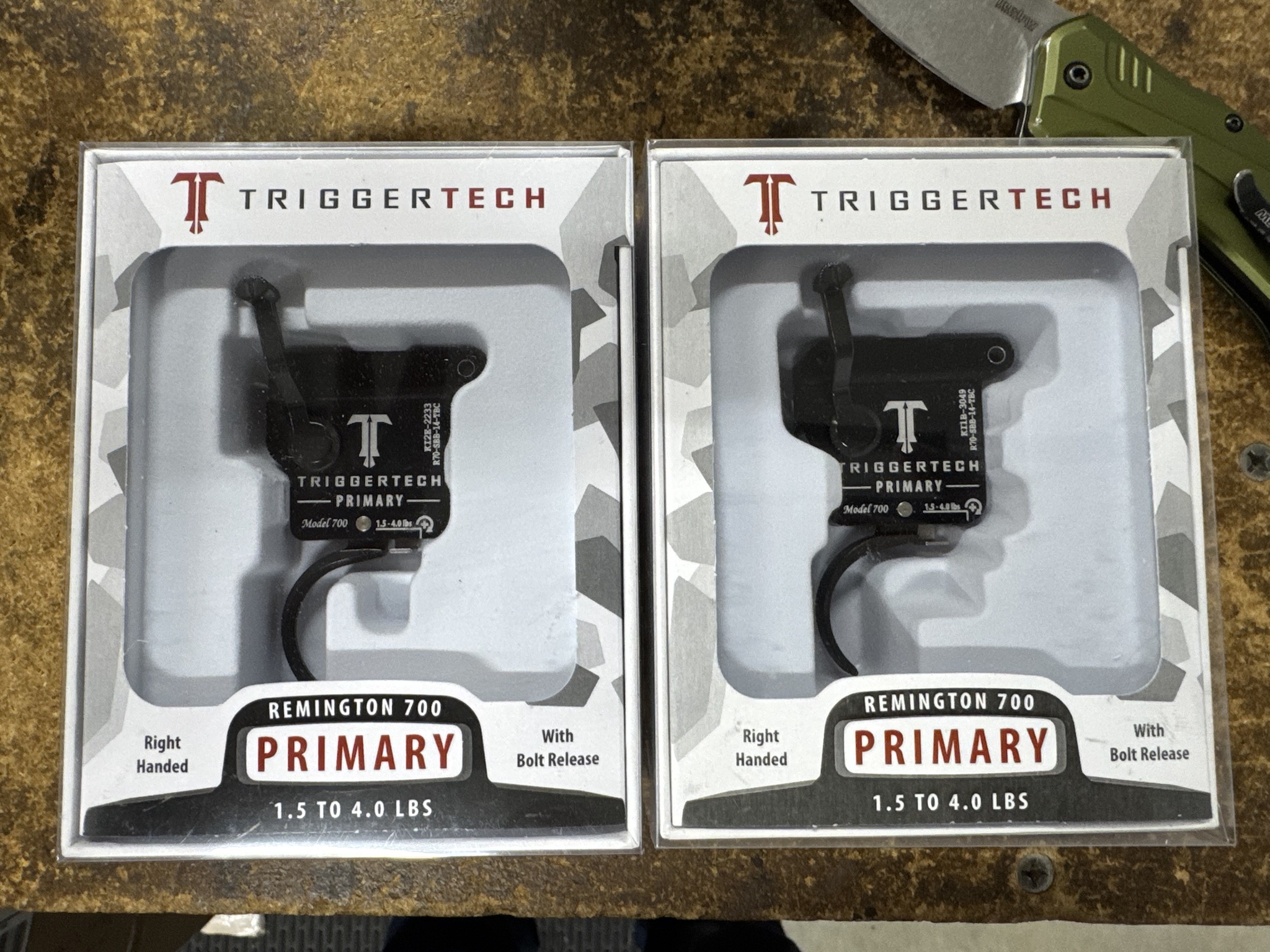
Also, got my trigger in today...

qhft7vq.jpeg


Tony.
 
I turned a bolt body holder to check the bolt lug runout. Started off with a piece of scrap steel and turned it down to a 1/2" diameter, then chucked it in a collet and threaded it.
7jlFjEl.jpeg


j5subyq.jpeg


I put my live center gently in the firing pin hole and checked the lugs. They were within about 0.0005" of each other.
PAyAzdW.jpeg


Although I did check the bolt body and the handle end had about 0.008 runout and the body behind the lugs and at the nose had about 0.004" runout. is this typical? Do I pay attention to the body runout?

After using my jig, I think I should have made it with a shoulder. I might make another.

Also, got my trigger in today...

qhft7vq.jpeg


Tony.

M700 being a two-piece bolt, the bolthead is never concentric with the bolt body.

I made a spider/collar that fits over the bolthead for my live center to dial it in prior to skimming the backside of the lugs.
 
Maybe clean up the receiver face and grind the lug parallel and shoot it. Simple operations that certainly won't hurt. Or shoot as is. The target will tell you.
Paul
Same opinion here.

I’ll just add…Put a good trigger on it as well. I personally like Bixn’ Andy triggers.
Anything else is a complete waste of time and money on a factory 700 with how affordable some of the nice aftermarket 700 clones are that have all the modern updates. The trigger is transferable its sound investment
 
The firing pin hole is seldom truly concentric with the outside of the bolt. The same is true of the threads at the other end. When I rework a bolt, I try to make everything concentric, straight, and perpendicular, working from the outside of the bolt. For this reason, I use the steady rest for a lot of the work. When I make the mandrel, or plug, to hold the bolt, the last step is to hold the head of the bolt in the 4-jaw chuck, and support the rear of the bolt in the steady. Then, I turn a center in the plug and take a light cut on the outside. Now, I can remove the steady, support the mandrel on the tailstock center, then take a light facing cut on the rear of the locking lugs. Now the lugs are perpendicular to a center axis based on the outside of the bolt body.
With the lugs taken care of, I can flip the bolt around, hold the mandrel in the 4 jaw chuck, support the front end in the steady, then true up the bolt face and the bolt nose. If the firing pin hole is seriously offset, I may consider bushing the bolt. If the firing pin hole is off, the firing pin may be bearing on one side and dragging. In many cases, the pin is even bent by this misalignment. This was the case on a 40X bolt of my own I recently worked on. I bushed this one and ended up with virtually no runout. At the same time, I reduced the firing pin tip to 1/16" and fitted the pin so that it slid freely into the bolt and showed no interference. On this particular bolt, the bolt head was crooked in every possible way. WH
 
The firing pin hole is seldom truly concentric with the outside of the bolt. The same is true of the threads at the other end. When I rework a bolt, I try to make everything concentric, straight, and perpendicular, working from the outside of the bolt.

My problem is, the type of bolts that are getting "blueprinted" doesn't necessarily have bodies that aren't worn/oval, even from the factory.
 
I find that most of them are worn on one side, usually in line with the left (top) lug at the rear. The rest of the bolt is round. So, if you can dial even on three sides, the fourth side is what it is. When you do your sleeve or inserts at the rear, you will have established your centerline and everything goes from there. If the rear is centered and the lugs and seats are perpendicular, when the bolt is cocked and locked it has to be straight.
When I say I make everything concentric to the outside, I'm really saying I make it concentric with my established outside. Now, if the bolt is seriously out of round, you dial it in the best you can, then turn a track at each end for a reference. Alternatively, you can put a split sleeve at each end (like a scope ring with no base) and true it for your reference track. The thing is, when you are done, YOU have established the centerline and axis on the bolt. You are in charge! WH
 

Upgrades & Donations

This Forum's expenses are primarily paid by member contributions. You can upgrade your Forum membership in seconds. Gold and Silver members get unlimited FREE classifieds for one year. Gold members can upload custom avatars.


Click Upgrade Membership Button ABOVE to get Gold or Silver Status.

You can also donate any amount, large or small, with the button below. Include your Forum Name in the PayPal Notes field.


To DONATE by CHECK, or make a recurring donation, CLICK HERE to learn how.

Forum statistics

Threads
168,183
Messages
2,249,701
Members
81,082
Latest member
stoxie32
Back
Top