I have been building and shooting A/R's since the 70's. for the past 20 years, I've been mostly interested in long (24" to 26") heavy-barreled varmint rigs, though my caliber choices may differ from yours. I shoot .223 Wylde chambers, .20 Practical, 6.5 Grendel. Over the years, I've worn out thousands of pieces at a time of Winchester, Federal, Nosler, Remington, Lapua, as well as Lake City and Twin City mil brass - most of that in the .223's and .20P. Provided I have the rifle properly "springed" (I don't use adjustable gas blocks), and I'm not running the loads hot, I have learned to expect 5 to 9 firings on my brass, mostly depending on the make of brass and the weight of the bullet and the charge I'm shooting. I toss any brass shot 9 times, regardless. I get the fewest loadings from the commercial brass as a rule and/or when shooting heavy bullets. Optimum life is attained with bullets weighing 50 grains or less as opposed to 69 grains or more, for example. The military brass (regardless of the arsenal) seems to last as long or longer than the good commercial brass. I do a lot of brass prep on all my brass, including a light turn on the necks. My aim is to get 8 firings on my brass and a lot of that is predicated on my load. If I were competing, my aim might be more like 4 firings - and I'd not go that far unless I was annealing. A split neck on the 4th firing is a possibility without annealing and that will throw your score. That is a plus for the lapua brass, as it will go longer without splitting, as a rule.
I've gotten decent case longevity from Lapua, Winchester and Nosler. The Remington and Federal are softer, though can still easily hang in there 6 firings if not loaded hot. The key to best brass life in an A/R is tuning the rifle to not bash your brass on ejection and (ideally) annealing it at least every two firings. I also make sure I have turned my sizing die expander ball to be only a snug fit in the neck when sizing - not oversized as they come. If this is not done, neck splits will often be encountered a lot more frequently after 5 or 6 firings and the load will shoot noticeably different on firing #3 or 4, as opposed to firing #1, for example due to neck tension change (spring back) if there is no annealing. It is more noticeable on the Mil brass, which seems to be a bit more "brittle" than the commercial brass, regardless of make, though I've had some hard Winchester brass too.
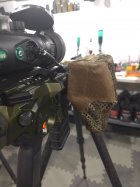
I use brass catchers on everything so my brass doesn't get stepped on, etc. I only bump my shoulders .002". Keeping a relatively uniform shoulder bump minimized to .002" pretty much requires annealing. If not annealing, maybe bump a bit more, as you will have more spring back after a day or two and you will be closer to the shoulder than you realize. The more you bump back, the more your accuracy will degrade and the more your brass will stretch on firing and require trimming, wear out sooner, etc. Once up to about 6 or 7 firings on any A/R brass, it is a good idea to begin monitoring for the formation of the ring inside the base of the brass where case separation begins, if that has not already been done. Target rifles where shoulders are barely bumped can go many firings with little concern over this, though factory full-length sizing dies and bumping shoulders speed the brass stretch above the web. Just makes sense to watch these things.