It’s actually a lot - the most of any round I load, on new brass, as I don’t opt to expand the neck. Because the first loading is so compressed, (at the upper weight of testing) I really need that bullet to hold progress, as I rotate it, lug nut tightening style, incrementally seating it, and, as Ned mentions a round might have to be unloaded on the line, sometime.
The unmeasured order of magnitude of seating force I put at 3 times the force to seat a typical bullet in a virgin case.
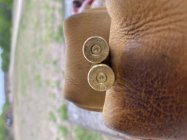
On my original high resolution pics before the system automatically decimates pixel count, I can easily see the outline of the neck’s stretching from the bullet’s excess diameter.
We can likely all guesstimate from reloading experience roughly what that force would be on an empty shell, by itself, to expand the neck. I’m putting that amount of pressure to merely expand the neck - as only 1/3 of the total force used to seat the bullet. The other 2/3’s of the force I use, is to compress the powder. (It’s much easier the next time around and the bullets seat straighter, as well.)
In fact the powder is so compressed the first time, that I will break seating into an initial stage and several hours later, a final one, to permit settling of kernels. Again, for virgin brass. I have even gently rapped the case heads on the reloading bench to assist that settling process, which is very helpful.
(All of this is why I’m pretty confident in that “nothing too dramatic” with H4350, reference above, as long CCI 41 primers are used with Lapua Palma. I truly don’t believe more powder can be squashed into a .308 than I have done, with any reasonable bullet retention in the case, there’s not a heavier match bullet I’m aware of, and I’m already at an 8 twist.)