• This Forum is for adults 18 years of age or over. By continuing to use this Forum you are confirming that you are 18 or older. No content shall be viewed by any person under 18 in California.

Seating depth input

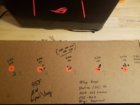
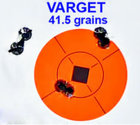
Just performed a seating test to find the best accuracy in a Ruger RPR. The initial test went like this:
Seating 1.jpg
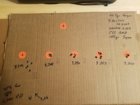
I chose 3.250 (OAL) and set up a new test, this:
Seating 2.jpg
Needless to say, I'm pretty happy. Here is the question. Both of these tests were done around 40-45 degrees. I really like the 3.260; but, if the temperature rises will the chart "move" to the right like an OCW tends to do with rising powder temperatures?
In all reality I will not be shooting competitively at 40 degrees. Would you choose 3.245 or 3.260? My thought process is to play it safe and use the 3.245.
BTW: These are all 5 shot groups, shot in about 1 minute for each group, with no cleaning between rounds.

Thanks in advance!
 
You using wind flags? With that much delay between shots it appears you have a lot of wind noise in there that makes it hard to evaluate. As far as your temp changes- theres no set number, you gotta test. You cant even get a number from graphing other temp data points- its not a straight curve. Look at temp sensitivity graphs and youll see what i mean.
 
Pick the 2 best and do a 10 shot group to confirm it. Give the barrel time enough to cool in between shots. Also shot at least 3 shots before starting to shoot a group to warm up the barrel. A good way to check barrel temp is to just grab it. If you can hold it without being too uncomfortable, it good to go. If you have a non contact thermometer, use it. Maybe 100-110°. Kinda strange it opened up and low at 3.240 and great at 3.245. Same with 3.255 and 3.260. Those 2 groups are good, I'm guessing at 100 yards? If you can chronograph the shots and you may want to try and match the velocity in warmer weather if it doesn't group the same.
 
Pick the 2 best and do a 10 shot group to confirm it. Give the barrel time enough to cool in between shots. Also shot at least 3 shots before starting to shoot a group to warm up the barrel. A good way to check barrel temp is to just grab it. If you can hold it without being too uncomfortable, it good to go. If you have a non contact thermometer, use it. Maybe 100-110°. Kinda strange it opened up and low at 3.240 and great at 3.245. Same with 3.255 and 3.260. Those 2 groups are good, I'm guessing at 100 yards? If you can chronograph the shots and you may want to try and match the velocity in warmer weather if it doesn't group the same.
I was also curious about the quick settling on both groups. I did, however, see almost exactly the same results on the center node for both tests. I am quickly becoming a believer in CBTO seating!
I am going to do 10 each on the suggested nodes, this time at 300 and with wind flags. I perform groups exactly like I shoot - from a bipod and bag, through the magazine, continuos but steady firing. When I find that great recipe I usually load 500 and move to accurizing the next one.
Thanks!
 
I was also curious about the quick settling on both groups. I did, however, see almost exactly the same results on the center node for both tests. I am quickly becoming a believer in CBTO seating!
I am going to do 10 each on the suggested nodes, this time at 300 and with wind flags. I perform groups exactly like I shoot - from a bipod and bag, through the magazine, continuos but steady firing. When I find that great recipe I usually load 500 and move to accurizing the next one.
Thanks!
Try it on a day that has very little wind if possible. Keep the barrel temp as constant as you can. If you get a known pulled shot or other screwup, ignore it and reshoot that one.
 
I always believe in doing a final test with at least 10 shots. With especially 2 or 3, anything can happen. 5 is usually indicative that you are getting close. 10 or more confirms it to me. These are some old targets I had pictures of.
I shot these 6 shots at 215 yards. I don't know what order but that's a strange pattern.
s1.jpg
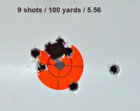
This is 9 from my AR. It's a cheap Palmettorifle with a non floated 16" barrel and usually groups at best at about 1-1/4+". 5 went through the same ragged hole. I would have felt great if it wasn't for the other 4. At what order? It's possible that 3 consecutive shots touched but that's not an accurate group for this rifle. The 8 shots less the flier I would have been happy with.
s6.jpg
The last time I was out I caught a brief moment that the 10-15 mph cross wind died down. I shot these 3 at 215 yards. That was the last 3 rounds I had with me. With only 3 shots I can't really believe it. Earlier I was getting 1-1/2" horizontal spread but was not compensating for the wind.
Shots-2.jpg
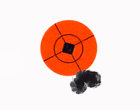
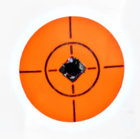
I put a new scope on my AR. Dialed it in across the yard using a laser off the side of the garage. Hopefully good enough to get on a whole piece of posterboard at 100y. This is the 1st shot on a 1" sticker. I thought I'd missed the whole thing so went to look. That's the point I should have quit and went home a hero. The rest of the group was about 1-1/2" and no 2 touching.
First Shot-.jpg
 
I would test 3.260 - 3.265 - 3.270"

Or stick with 3.247"

3.245" looks good too, but 3.240" has a huge difference in point of impact (unless you adjusted scope after that group), and same 3.240" is not a pretty group. Thus 3.245" is too close to a crappy seating depth sibling.
That's why I said 3.247" instead of 3.245". So it moves a bit farther away from the crappy 3.240" group.
 
That's some hot loads.

I tend to agree with LVLAaron. That seems like a pretty stout load of Varget for .308 Win setup [NOTE: I'm assuming a .308 Win here, but if you're using one of the larger cartridge .30 cal RPR rifles, those charge weights would be way off on the low side and I'm not sure Varget would be the best powder choice, anyhow]. What have you done previously with regard to optimizing charge weight? If you're running at or over MAX pressure, seating depth testing can be misleading as groups can sometimes be very erratic.

The second question I have is with regard to your seating depth measurements. Again, I'm assuming a .308 Win here, so if I'm incorrect on that, please give us a little more info on your setup. Presumably, you using COAL measurements for your seating depths, not CBTO. Regardless, something doesn't seem right. By my calculations, the shank of a 185 Juggernaut seated in a .308 Win case at a COAL of 3.260" would actually be out of the neck, or very close to it. Are you actually using COAL measurements for your seating depth? Or CBTO? I'm just trying to figure out exactly what you're doing here so as to possibly provide better feedback on your seating depth testing.

On a more general note, your approach to seating depth testing appears to have been using a very coarse increment test first, to find a narrower region in which to test further. You selected the region around 3.250", which looks like the place to be. However, in your fine increment test, you are using .005" test increments. In my experience, .005" increments are still pretty coarse, especially for a .308 Win. I would suggest using .003" increments.

The whole point of doing a fine increment seating depth test is to identify an "optimal window" where precision is the best, and then load to somewhere between the leading edge and the middle of that window (i.e. choose a seating depth from somewhere between the longest seated rounds to the middle length rounds in the optimal window, not the shortest). That will give you the most headroom for land erosion before you will need to re-visit seating depth again. What you're looking for in the "optimal window" is at least two to three successive .003" increments that all give the best/tightest grouping. That way, you have defined both the leading and trailing edges of the "optimal window", as well as the middle. If you test in larger increments, such as .005", it is not uncommon to see what appears to be a single tight group at one seating depth increment, that opens up in the seating depth increments to either side. In other words, it's easy to miss the the optimal window if you test in increments that are too coarse.

With that idea in mind, I'd suggest testing between 3.240" and 3.255" using .003" increments (i.e. 3.240", 3.243", 3.246", 3.249", 3.252", 3.255"). This is only a guess, but I wouldn't be surprised if the groups tightened up from 3.243" to 3.246"/3.249". That would then be your "optimal window", and I'd would probably load to 3.243" or 3.246". In any event, I think you see where I'm going with the finer increment testing idea. When you only see one seating depth that groups well, and the groups to either side open up, it can be very difficult to make an informed choice.

 
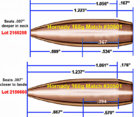
I decided to check the jump distance with some new and old bullets. I had a few that I had checked this with a few years ago. Well, the distance increased an average of .004" so the barrel is getting some wear. Here are 2 different lots of a Hornady #30501 Match BTHP that I had some of. I picked a couple representative of the boxes. I took measurements from both ends with the Hornady comparator (which is .010" smaller than the bullet diameter), measured the overall length and calculated the rest. Setting these to the same distance from the lands, the top one has to sit .007" deeper in the case neck but the overall length is .014" shorter. The approximate bearing surface is .026" shorter and the distance from the tip to the ogive/bearing surface point is .022" longer.
308 (3).jpg
The next time I buy bullets, it will be at least 500 from the same lot and at least 200 cases, probably Lapua, of the same lot. Then work up new loads with them. I recently went though several cases and measured the capacities. All Hornady cases, the largest took 184.88 grains (11.980 cc) of H2O and the smallest took 151.62 grains (10.466 cc). So imagine picking the smallest volume case (which has 14-1/2% less internal volume) and the bullet on top here which seats .007" deeper and has a shorter boat tail also decreasing case volume even more. That would produce a dramatic rise in pressure. These had different head stampings but were all Hornady .308 cases, all sized and trimmed the same.

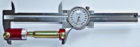
I seat all similar bullets to the same length using this tool.
Measure.jpg
 
I decided to check the jump distance with some new and old bullets. I had a few that I had checked this with a few years ago. Well, the distance increased an average of .004" so the barrel is getting some wear. Here are 2 different lots of a Hornady #30501 Match BTHP that I had some of. I picked a couple representative of the boxes. I took measurements from both ends with the Hornady comparator (which is .010" smaller than the bullet diameter), measured the overall length and calculated the rest. Setting these to the same distance from the lands, the top one has to sit .007" deeper in the case neck but the overall length is .014" shorter. The approximate bearing surface is .026" shorter and the distance from the tip to the ogive/bearing surface point is .022" longer.
View attachment 1153106
The next time I buy bullets, it will be at least 500 from the same lot and at least 200 cases, probably Lapua, of the same lot. Then work up new loads with them. I recently went though several cases and measured the capacities. All Hornady cases, the largest took 184.88 grains (11.980 cc) of H2O and the smallest took 151.62 grains (10.466 cc). So imagine picking the smallest volume case (which has 14-1/2% less internal volume) and the bullet on top here which seats .007" deeper and has a shorter boat tail also decreasing case volume even more. That would produce a dramatic rise in pressure. These had different head stampings but were all Hornady .308 cases, all sized and trimmed the same.

I seat all similar bullets to the same length using this tool.
View attachment 1153107

Ohhh, lets do this over! Though something looked funny. I used the weights of the brass as the weight of the water to fill them. I'll correct it below.

The next time I buy bullets, it will be at least 500 from the same lot and at least 200 cases, probably Lapua, of the same lot. Then work up new loads with them. I recently went though several cases and measured the capacities. All Hornady cases, the heaviest case took 51.40 grains ( 3.33 cc) of H2O and the lighest case took the largest volume of 54.72 grains (3.55 cc). So imagine picking the smallest volume case (which has 7% less internal volume) and the bullet on top here which seats .007" deeper and has a shorter boat tail also decreasing case volume even more. That would produce a dramatic rise in pressure. These had different head stampings but were all Hornady .308 cases, all sized and trimmed the same.
 
I tend to agree with LVLAaron. That seems like a pretty stout load of Varget for .308 Win setup [NOTE: I'm assuming a .308 Win here, but if you're using one of the larger cartridge .30 cal RPR rifles, those charge weights would be way off on the low side and I'm not sure Varget would be the best powder choice, anyhow]. What have you done previously with regard to optimizing charge weight? If you're running at or over MAX pressure, seating depth testing can be misleading as groups can sometimes be very erratic.

The second question I have is with regard to your seating depth measurements. Again, I'm assuming a .308 Win here, so if I'm incorrect on that, please give us a little more info on your setup. Presumably, you using COAL measurements for your seating depths, not CBTO. Regardless, something doesn't seem right. By my calculations, the shank of a 185 Juggernaut seated in a .308 Win case at a COAL of 3.260" would actually be out of the neck, or very close to it. Are you actually using COAL measurements for your seating depth? Or CBTO? I'm just trying to figure out exactly what you're doing here so as to possibly provide better feedback on your seating depth testing.

On a more general note, your approach to seating depth testing appears to have been using a very coarse increment test first, to find a narrower region in which to test further. You selected the region around 3.250", which looks like the place to be. However, in your fine increment test, you are using .005" test increments. In my experience, .005" increments are still pretty coarse, especially for a .308 Win. I would suggest using .003" increments.

The whole point of doing a fine increment seating depth test is to identify an "optimal window" where precision is the best, and then load to somewhere between the leading edge and the middle of that window (i.e. choose a seating depth from somewhere between the longest seated rounds to the middle length rounds in the optimal window, not the shortest). That will give you the most headroom for land erosion before you will need to re-visit seating depth again. What you're looking for in the "optimal window" is at least two to three successive .003" increments that all give the best/tightest grouping. That way, you have defined both the leading and trailing edges of the "optimal window", as well as the middle. If you test in larger increments, such as .005", it is not uncommon to see what appears to be a single tight group at one seating depth increment, that opens up in the seating depth increments to either side. In other words, it's easy to miss the the optimal window if you test in increments that are too coarse.

With that idea in mind, I'd suggest testing between 3.240" and 3.255" using .003" increments (i.e. 3.240", 3.243", 3.246", 3.249", 3.252", 3.255"). This is only a guess, but I wouldn't be surprised if the groups tightened up from 3.243" to 3.246"/3.249". That would then be your "optimal window", and I'd would probably load to 3.243" or 3.246". In any event, I think you see where I'm going with the finer increment testing idea. When you only see one seating depth that groups well, and the groups to either side open up, it can be very difficult to make an informed choice.
THANK YOU!!!@Nedd
This is what I was looking for, mostly. I am seating 3.242, 3.245, 3.248 and 3.257 3.260, 3.263, and increasing to 300 meters.
But.... I still wonder if I find a node, say 3.260, in cold weather that is stable for .005 to either side if I should load to the longer measurement to remain close to stable in warmer weather? I can always seat a little deeper, even at the range, but pulling them is a bear.
As to the load workup, I know it's warm-to-hot. I very carefully worked up to this and I have:
- no primer flattening
- no ejector wipe
- no loose primers
- no sticky bolt
- no split necks
Or any other signs. The entire work up is something I posted up a few months back. This is the final step for me. Then I load a 1000 and call it done.
This is an RPR with an amazingly, almost alarmingly, long throat. I can only load this long and use a magazine because of an Alpha Industries magazine. Shame that they went out of business.
Measurements are COAL; but, I seat to CBTO using a Hornady bullet comparator. CBTO for the second test was 2.890, 2.895, 2.900, 2.905, and 2.910. I only posted COAL because no two comparators that I have ever used were alike.
Thanks again Nedd and T, I would like to hear your thoughts on external temperature effects if you have the time (PV=nRT and all that).
 
In my hands, as long as the velocity does not change outside the optimal window, neither should the seating depth. But that is for F-Class shooting; BR shooters are likely more concerned with making minor adjustments to seating depth as environmental conditions change to keep the absolute optimal tune (precision). If the temperature changes sufficiently to cause a significant change in velocity with the powder you're using, let's say 20-30 fps (or more), then you may well find that an adjustment to the seating depth is necessary.

However, the caveat to that approach is that if the velocity changes that much due to temperature, the load may be out of tune such that even adjusting seating depth won't bring it all the way back. So I find it much simpler to adjust charge weight by a few tenths as necessary to maintain consistent velocity over the temperature range I typically shoot. That requires shooting a given load over the high/low temperature range you expect to shoot in, and adjusting the charge weight as necessary to maintain consistent velocity.

It's not too difficult to figure out how much you need to adjust the charge weight with a given powder to keep the velocity fairly constant over a range of temperatures from around 40 to 95 degrees, or so. Spring or fall are usually good times of the year to carry out such tests as you often get a mixture of warm/cold days fairly close together, and probably won't have to wait too long a time to test in both extremes. Once you know how much you need to adjust the charge weight as the temperature changes to keep the velocity fairly consistent, your optimal seating depth should also remain fairly constant, unless you're really striving to maintain 0.1 MOA precision or better. Most F-Class shooters don't take it to that level, with changing wind conditions usually being the limiting source of error over the long strings of fire we shoot.
 
THANK YOU!!!@Nedd
This is what I was looking for, mostly. I am seating 3.242, 3.245, 3.248 and 3.257 3.260, 3.263, and increasing to 300 meters.
But.... I still wonder if I find a node, say 3.260, in cold weather that is stable for .005 to either side if I should load to the longer measurement to remain close to stable in warmer weather? I can always seat a little deeper, even at the range, but pulling them is a bear.
As to the load workup, I know it's warm-to-hot. I very carefully worked up to this and I have:
- no primer flattening
- no ejector wipe
- no loose primers
- no sticky bolt
- no split necks
Or any other signs. The entire work up is something I posted up a few months back. This is the final step for me. Then I load a 1000 and call it done.
This is an RPR with an amazingly, almost alarmingly, long throat. I can only load this long and use a magazine because of an Alpha Industries magazine. Shame that they went out of business.
Measurements are COAL; but, I seat to CBTO using a Hornady bullet comparator. CBTO for the second test was 2.890, 2.895, 2.900, 2.905, and 2.910. I only posted COAL because no two comparators that I have ever used were alike.
Thanks again Nedd and T, I would like to hear your thoughts on external temperature effects if you have the time (PV=nRT and all that).

I'm having a hard time accepting that your COAL is at/around 3.25" as the my QuickLoad app shows this to be a -.090 for the shank depth. I also took one of my 185 Berger's and put in a case with slits in neck where I can see the boattail within the neck and it's not even seated at that COAL. So. . . .??? I also use Alpha Industries magazine for my RPR where I can get long seated bullets in the mag, but my .308 Alpha mag only goes out to 2.970. Something just ain't right . . .???:confused: :rolleyes:

Note too that with these numbers for seating, this 44.5gr of Varget wouldn't be a "hot load" because of the substantial volume from seating it out so far. So, no pressure sings would appear to be appropriate given such a seating depth. But, the numbers just don't add up.:(
 
I'm having a hard time accepting that your COAL is at/around 3.25" as the my QuickLoad app shows this to be a -.090 for the shank depth. I also took one of my 185 Berger's and put in a case with slits in neck where I can see the boattail within the neck and it's not even seated at that COAL. So. . . .??? I also use Alpha Industries magazine for my RPR where I can get long seated bullets in the mag, but my .308 Alpha mag only goes out to 2.970. Something just ain't right . . .???:confused: :rolleyes:

Note too that with these numbers for seating, this 44.5gr of Varget wouldn't be a "hot load" because of the substantial volume from seating it out so far. So, no pressure sings would appear to be appropriate given such a seating depth. But, the numbers just don't add up.:(

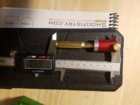
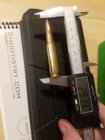
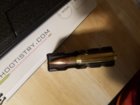
I have got to stop using my phone for posting. I finally fired up the laptop - should have done this from the start. Thanks for keeping me honest - I was 180 out in my thinking. It doesn't help that I am reloading 30-06 right now...
Thumbnails attached.
 

Attachments

  • 20200121_203842.jpg
    20200121_203842.jpg
    282.1 KB · Views: 40
  • 20200121_203939.jpg
    20200121_203939.jpg
    238.3 KB · Views: 43
  • 20200121_204006.jpg
    20200121_204006.jpg
    175 KB · Views: 32
I have got to stop using my phone for posting. I finally fired up the laptop - should have done this from the start. Thanks for keeping me honest - I was 180 out in my thinking. It doesn't help that I am reloading 30-06 right now...
Thumbnails attached.

Yeah, that COAL at 2.913 makes much more sense. :rolleyes: :D

And as other's have mentioned, that 44.5 gr of Varget is a pretty HOT load. I don't have numbers for volume on Starline brass, so using a volume of 55.5 gr of H2O QuickLoad shows pressure a little above SAAMI max of 62,000 psi at 70°F. I've used 43.9 gr of Varget in my RPR .308 pushing 175 SMK's and got pressure signs, which was just under the SAAMI max @ 50°F. That load was doing ok for me with really good chono numbers but only .550 MOA, so I backed off.
 
I'm having a hard time accepting that your COAL is at/around 3.25" as the my QuickLoad app shows this to be a -.090 for the shank depth. I also took one of my 185 Berger's and put in a case with slits in neck where I can see the boattail within the neck and it's not even seated at that COAL. So. . . .??? I also use Alpha Industries magazine for my RPR where I can get long seated bullets in the mag, but my .308 Alpha mag only goes out to 2.970. Something just ain't right . . .???:confused: :rolleyes:

Note too that with these numbers for seating, this 44.5gr of Varget wouldn't be a "hot load" because of the substantial volume from seating it out so far. So, no pressure sings would appear to be appropriate given such a seating depth. But, the numbers just don't add up.:(

That's the same thing I was thinking...at 3.260" COAL, there wouldn't even be any shank left in the neck with a 185 Juggernaut. That's taking the idea of "soft seating" a bit too far IMO. ;)

Along the same line, taking into account your correct COAL numbers, 44.5 gr of Varget is a pretty hot load. Running a load at the top end like that may also make it more difficult to interpret the effect of seating depth as things tend to become very erratic. I'd be looking to tune the charge weight in somewhere closer to the 43.0 to 43.8 gr range with Varget at that COAL. I think you'll find there should be a good node with the 185s in that charge weight range at the COAL you're using. Then you can re-visit seating depth using a more suitable charge weight.
 
Last edited:
That's the same thing I was thinking...at 3.260" COAL, there wouldn't even be any shank left in the neck with a 185 Juggernaut. That's taking the idea of "soft seating" a bit too far IMO. ;)

Along the same line, taking into account your correct COAL numbers, 44.5 gr of Varget is a pretty hot load. Running a load at the top end like that may also make it more difficult to interpret the effect of seating depth as things tend to become very erratic. I'd be looking to tune the charge weight in somewhere closer to the 43.0 to 43.8 gr range with Varget at that COAL. I think you'll find there should be a good node with the 185s in that charge weight range at the COAL you're using. Then you can re-visit seating depth using a more suitable charge weight.
 

Upgrades & Donations

This Forum's expenses are primarily paid by member contributions. You can upgrade your Forum membership in seconds. Gold and Silver members get unlimited FREE classifieds for one year. Gold members can upload custom avatars.


Click Upgrade Membership Button ABOVE to get Gold or Silver Status.

You can also donate any amount, large or small, with the button below. Include your Forum Name in the PayPal Notes field.


To DONATE by CHECK, or make a recurring donation, CLICK HERE to learn how.

Forum statistics

Threads
167,685
Messages
2,238,130
Members
80,674
Latest member
Narcan
Back
Top