• This Forum is for adults 18 years of age or over. By continuing to use this Forum you are confirming that you are 18 or older. No content shall be viewed by any person under 18 in California.

Solvents that etch barrels

No, I have no idea how much metal is removed over any period of time. I do know it all depends on the type of acid and the makeup of the steel for the extent of metal removed. And likewise for the amount of time when the acid's reaction becomes neutralized (environment involved can have an effect on the time also).


Actually, I have seen electron microscope pictures of etchings and their depth (think microchips, a little different than steel ;) ).
My thinking goes something like How many shots is a barrel going to give us and how much metal is removed every time the gun goes off? This for sure happens. Does etched metal erode faster than bare metal? I think it would take testing but is the testing worth doing? Prolly the best thing for curious people is just do what one thinks and "Don't Ask" :)
 
And neither would I.
I am interested only in what is on the label.
“it is used all the time on metals….”
As you know there are many types of metals. That statement ie useless, as well as meaningless. A phone call? Kid with his hat on backwards. Or maybe CLR has metallurgists answering their phones!
Stainless sinks and faucets.. metal shower heads… go ahead go to you tube and check it out.. that is what CLR is for… but again I dont use it… I have and it isnt really all that much better on carbon
 
My thinking goes something like How many shots is a barrel going to give us and how much metal is removed every time the gun goes off?
:rolleyes: :eek:Another another something with a lot of variables. :p ;)
This for sure happens. Does etched metal erode faster than bare metal?
I don't know for sure as I've not seen or heard of any hard data along that line. But. . . etching, like with CLR or citric acid will cause microscopic pitting and such pitting is likely to result in faster wear.

I think it would take testing but is the testing worth doing?
Probably not worth testing unless you've got a really good economical reason to do so.
Prolly the best thing for curious people is just do what one thinks and "Don't Ask" :)
I don't think there's many people more curious about things than I am. That's why I've always taken a lot of interest in a wide variety of sciences. Guess that why I'm often known as a jack of all trades and master of none. :D Curious people have a hard time not asking. ;)
 
FWIW the biggest risk to SS barrels occurring from misuse probably comes from Sweets….heavy ammonia.
There’s a reason instructions dictate not leaving in barrel more than 15-20 minutes.
I don't think Sweets is all that bad, so long as you don't leave it in there for days on end.

The main reason doing that would be bad is because ammonia is ionic ... an electrolyte ... and copper is strongly cathodic, so if you leave ammonia in a copper-fouled barrel, you can get galvanic corrosion. Your barrel and the copper fouling in effect become a battery with the copper supplying the positive charge and the barrel supplying the negative. But any electrolyte will do the same thing if two dissimilar metals are in contact with it, whether the electrolyte is an acid (like HCl toilet bowl cleaner) or a base (like ammonia) or an ionic salt like table salt (NaCl) or the potassium chloride (KCl) left by corrosive primers.

In general most metals are attacked far more by acids than by bases like ammonia -- aluminum and copper being two common exceptions. Bases (ammonia, lye, etc) are the opposite of acids, and they eat metals like copper and aluminum. But they shouldn't harm steel in the absence of copper or some other more-noble (cathodic) metal.

When I've got a lot of copper to remove, I skip the Sweet's and go straight to 10% janitorial ammonia, available at Ace/True Value hardware stores. It'll take your breath away, but it rips out copper fouling like you wouldn't believe.

 
Last edited:
I use CLR or sometime just a high concentration of Lemi Shine (citric acid) just for the carbon ring, where I'll set a soaked patch of it on that ring for 10-15 minutes soften the carbon. Then rinse it with some soaked patches with Hoppe's followed by a quick brushing that area with some IOSSO. Following that, it's cleaning the whole bore and throat with Patch-Out. This works pretty well for me.

Addendum: I should have mentioned my barrels are SS Krieger's.
 
Last edited:
Stainless sinks and faucets.. metal shower heads… go ahead go to you tube and check it out.. that is what CLR is for… but again I dont use it… I have and it isnt really all that much better on carbon
“You Tube?” Not a chance. Label….something different.
But I fully agree with you, I’m never using it either.
 
I don't think Sweets is all that bad, so long as you don't leave it in there for days on end.

The main reason doing that would be bad is because ammonia is ionic ... an electrolyte ... and copper is strongly cathodic, so if you leave ammonia in a copper-fouled barrel, you can get galvanic corrosion. Your barrel and the copper fouling in effect become a battery with the copper supplying the positive charge and the barrel supplying the negative. But any electrolyte will do the same thing if two dissimilar metals are in contact with it, whether the electrolyte is an acid (like HCl toilet bowl cleaner) or a base (like ammonia) or an ionic salt like table salt (NaCl) or the potassium chloride (KCl) left by corrosive primers.

In general most metals are attacked far more by acids than by bases like ammonia -- aluminum and copper being two common exceptions. Bases (ammonia, lye, etc) are the opposite of acids, and they eat metals like copper and aluminum. But they shouldn't harm steel in the absence of copper or some other more-noble (cathodic) metal.

When I've got a lot of copper to remove, I skip the Sweet's and go straight to 10% janitorial ammonia, available at Ace/True Value hardware stores. It'll take your breath away, but it rips out copper fouling like you wouldn't believe.
Sweets has destroyed BR barrels in far shorter than “days”. That’s a fact.
 
Ammonia can do it too. Some cleaners have it in their solution. My Brother had an old German 98.. Barrel was pitted up pretty good. First 5 shots were horrible, after that it shot great. Guess the fouling/copper filled in the holes. Go figure.
 
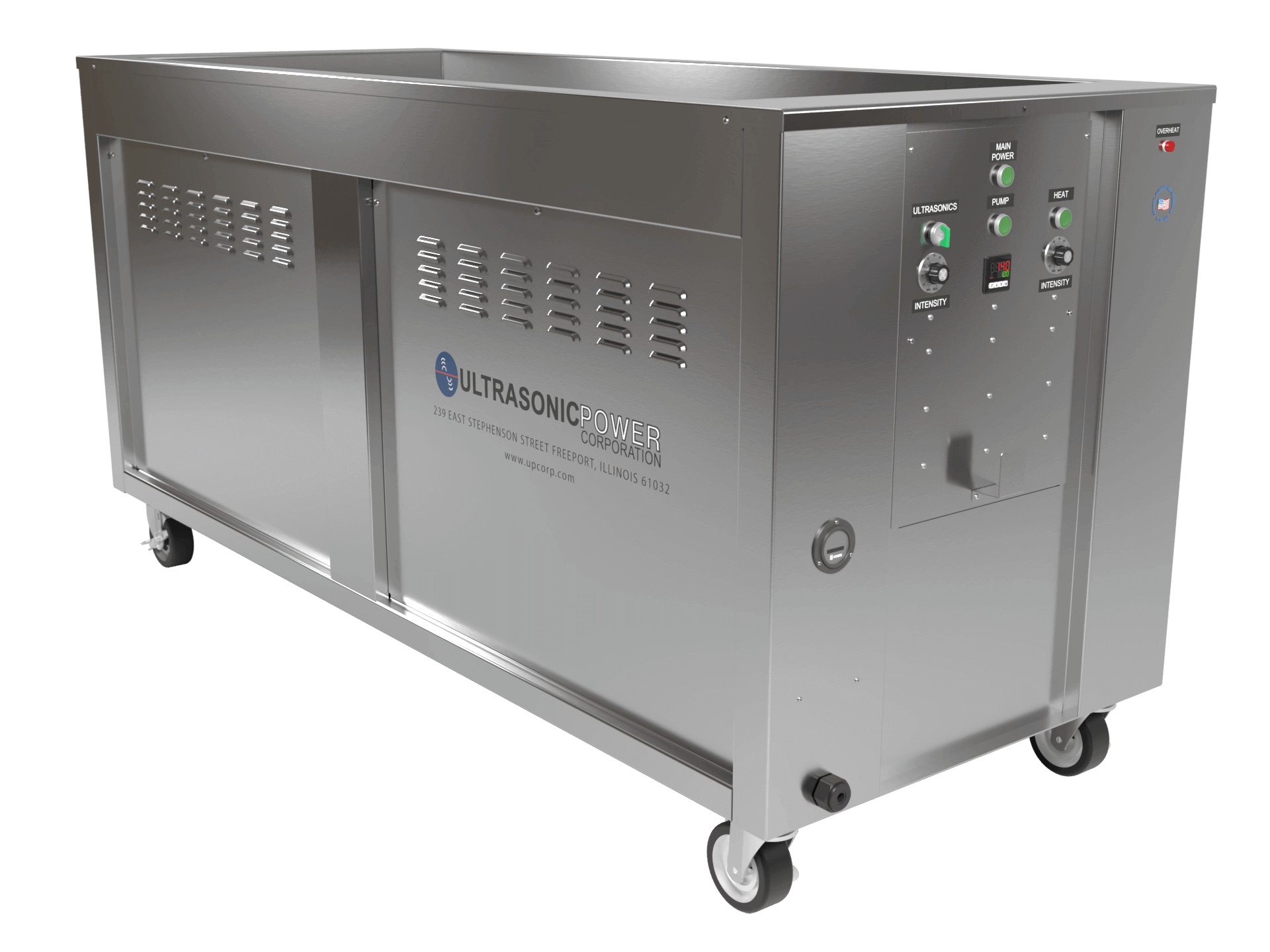
The best cleaner for muzzle breaks is an ultrasonic cleaner. 25 min and the break is free of all carbon.
 
The best cleaner for muzzle breaks is an ultrasonic cleaner. 25 min and the break is free of all carbon.
That's what I use along with heat. A nylon brush will remove the carbon coating.

My solution is the Lyman Turbo Sonic Gun parts Solvent diluted 20:1.
 
Last edited:
A few years ago there a long discussion here on CLR and a member soaked a SS barrel stub in it for something like a week or a month and didn't do anything to it.. Carbon steel might be a whole different story.
I seen what it does to carbon steel. Barrel definitely ruined. And no it wasn’t mine !
 
I spent my career etching metals and cleaning with acids and bases. I had many referances filled with chemical formulas to etch various metals and remove organic compounds.

Without a good understanding of the exact metal and chemical mixtures using the mixture on can easily have unfortunate consequences. It is better to stick to cleaners developed for the application.
 
A few years ago there a long discussion here on CLR and a member soaked a SS barrel stub in it for something like a week or a month and didn't do anything to it.. Carbon steel might be a whole different story.
I am the one who did this test, and I cut a barrel in half length wise in 3" pieces so you could see the bore. I let them soak in a veriety of cleaners for months and could not see any visible damage. We were trying to duplicate what we saw in a barrel on my friends rifle with our borescope. our conclusion was the damage in the barrel was there since new, not caused by cleaning fluids. defective barrel. I'm sure there are chemicals that do eat steel, just not the ones I used, sweets, butches bore shine, hoppes, witches brew, and a few others I can't remember.
 
OK, Here's what actually works and very quickly. RemClean on .0000 Steel wool wrapped around a worn out bronze brush. RemClean is BAD! There has been plenty said about RemClean on here and everywhere else but by god it works. The argument is about the grit in it, pretty much. More aggressive than JB and apparently a different form of grit but if one doesn't want to spend the afternoon stroking their cleaning rod, this is a method to prevent it.

I think the carbon removal thing is more relevant to folks who shoot a lot of rounds before they clean so folks who clean after every 20 shots do not need to be concerned about any of this, they don't have an issue and probably have no idea what some of us are talking about.

I have seen advertised a System of two liquids someone is selling, one of which is something similar to RemClean and a solvent to clean the aforesaid cleaner out. Have any of you had any experience with that?

Thanks,

Pete
 
Last edited:

Upgrades & Donations

This Forum's expenses are primarily paid by member contributions. You can upgrade your Forum membership in seconds. Gold and Silver members get unlimited FREE classifieds for one year. Gold members can upload custom avatars.


Click Upgrade Membership Button ABOVE to get Gold or Silver Status.

You can also donate any amount, large or small, with the button below. Include your Forum Name in the PayPal Notes field.


To DONATE by CHECK, or make a recurring donation, CLICK HERE to learn how.

Forum statistics

Threads
168,509
Messages
2,256,984
Members
81,362
Latest member
tha
Back
Top