• This Forum is for adults 18 years of age or over. By continuing to use this Forum you are confirming that you are 18 or older. No content shall be viewed by any person under 18 in California.

Rolling Block project

Sechrist2015

Gold $$ Contributor
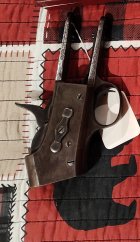
I have a no. 5 Remington rolling block action that's in really good shape. Pins are tight, springs all look and feel good. It was originally a 7x57, but I bought it as a bare action.
I am contemplating blasphemy and angry natives, but I'm curious if anyone knows if would handle a dasher or 6br barrel. I'd rather not get a face full of metal for the second time in my life, but I think it would be a slick set up that would definitely get some attention and strange looks.

Appreciate any information or insight y'all may have.
 

Attachments

  • IMG_20230911_222146347~2.jpg
    IMG_20230911_222146347~2.jpg
    493.2 KB · Views: 40
The No. 5s were chambered in quite a few smokeless cartridges. I want to say 52k psi is the limit on those. If I were you I'd get ahold of Kenn at rollingblockparts to discuss it.
 
I have a no. 5 Remington rolling block action that's in really good shape. Pins are tight, springs all look and feel good. It was originally a 7x57, but I bought it as a bare action.
I am contemplating blasphemy and angry natives, but I'm curious if anyone knows if would handle a dasher or 6br barrel. I'd rather not get a face full of metal for the second time in my life, but I think it would be a slick set up that would definitely get some attention and strange looks.

Appreciate any information or insight y'all may have.
I’d say you’re pushing it . It MAY be strong enough BUT it doesn’t hve a good gas venting design especially with a rimless cartridge.
If you decide to do it , I would design a wildcat based on the 6 br and clearly mark it as to prevent future caretakers using regular 6 br cartridges .
Make your case with minor changes , maybe a shorter case and a longer neck or use the older Remington design . A rimmed version would be cool . Maybe using a 307 case necked down to 6 mm . Sorry for the rant , I hope this makes sense, no coffee yet and a big dog on my lap ( typos )
Gary
 
It sounds really fun!
My only input is that short, fat, steep shouldered cases have more back thrust than longer, narrower cases.
 
I can't imagine how it would be any more fun than a 7x57 with a really good match barrel that shot lights out. Maybe I am messed up on these type of things , but i don't see a 7x57 giving up very much to many of the cartridges we use today.
 
In addition to the above information I can add this:

Remember that you are in control of your reloading practices. The pressure limits are there for your protection and guidance to achieve performance. Your cartridge/bullet choice can be reloaded to lower pressures so long as you observe the minimum load density. Not every cartridge has to run at 65,000 psi.

Usually the lower level of pressure is observed, 52,000 psi. But there is nothing wrong with running at 42 - 45,000 psi as long as you use the safety rules, procedures and common sense for safe reloading.

The 6BR, original Remington, should be a superb case to use. Longer neck and smaller case capacity. There are probably a dozen or more suggestions you could follow using good sense.

Enjoy your research and search for your perfect cartridge!

:)
 
This is a rather lengthy explanation but it sets aside the idea that this cartridge was semi-rimmed. The first statement is just following. The second is very nearly the end of the official transcript in red also before the drawings.

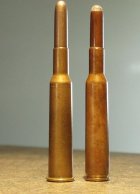
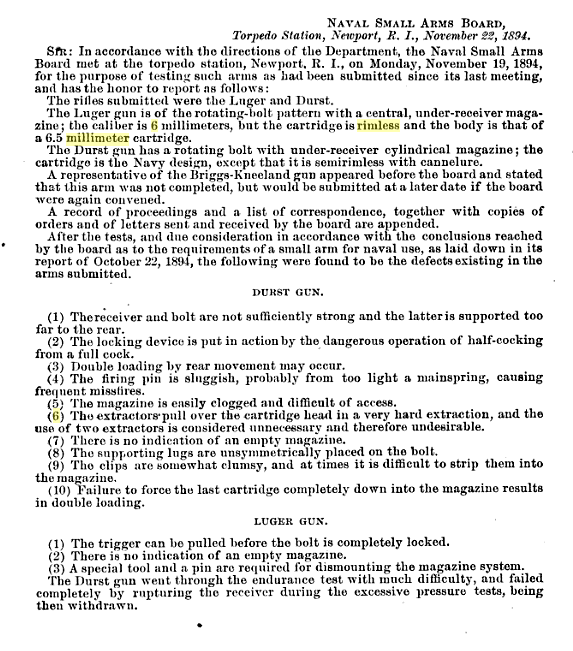
Looking at production ammunition for the 6mm Lee Navy, we see that the round the Navy eventually used was indeed rimless, but Wikipedia’s article on the 1895 Winchester-Lee rifle raises the question of what round was initially adopted – was it rimmed or rimless? Fortunately, we can find out for sure by looking at the Annual Report of The Secretary of The Navy from the relevant years of 1894-1895. We see in a discussion of a prototype turn-bolt Luger rifle in late 1894, before adoption, the 6mm Lee Navy was indeed rimmed:
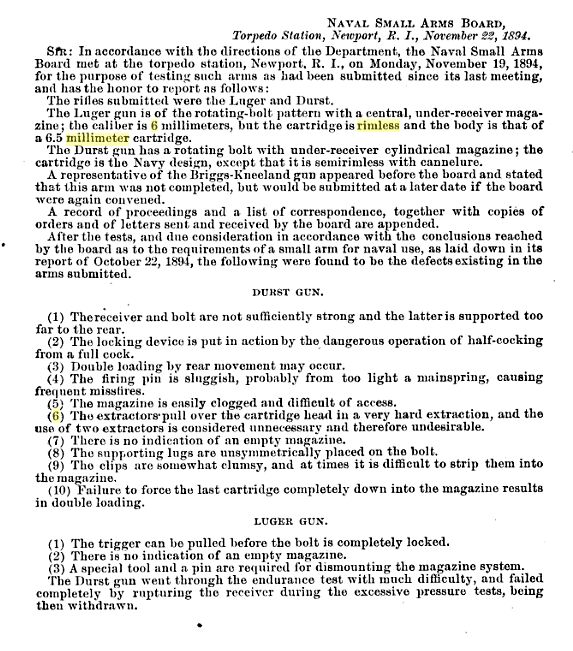
K0Hr7pw
Page 306: Note the date of November 22, 1894. The rimless cartridge referenced is a proprietary 6mm round, unrelated to the Navy project.


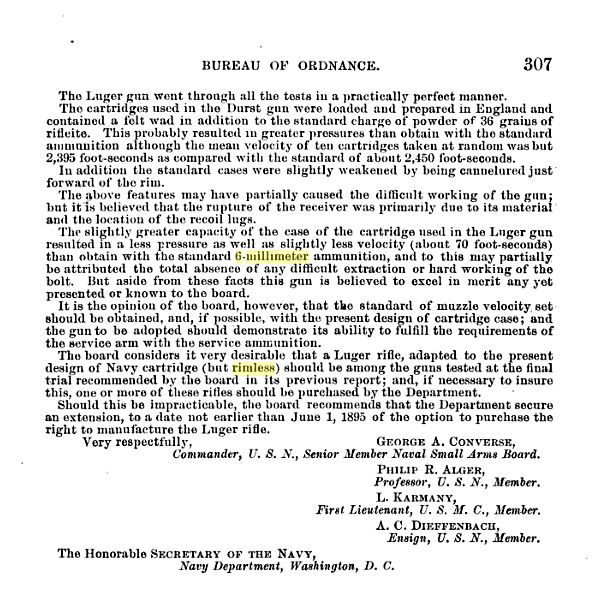
ELA1Ud5

Note the discussion of rechambering the Luger rifle to a rimless version of the Navy’s 6mm round, which at this point was still rimmed.


By July of the next year, however, the Navy had not only tested a rimless version, but it seems they had decided on it:
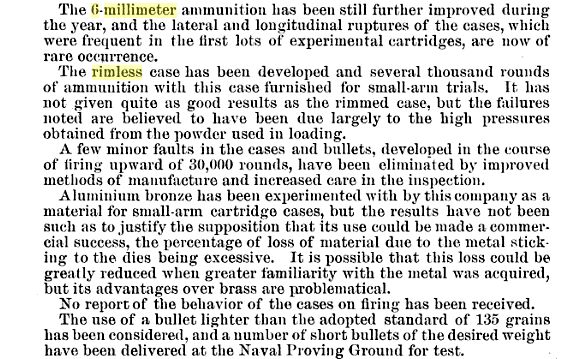
WteHrYS
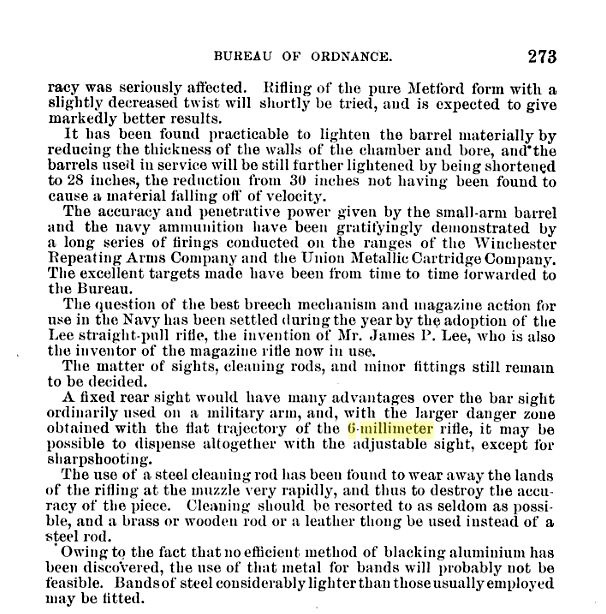
On page 268, the second paragraph is ambiguous as to whether the rimless version is the current focus of the program or not.


1PBh8OA
The Navy appears to have narrowed its choices down to something. The manufacturers are ready for production, says this paragraph on page 269.


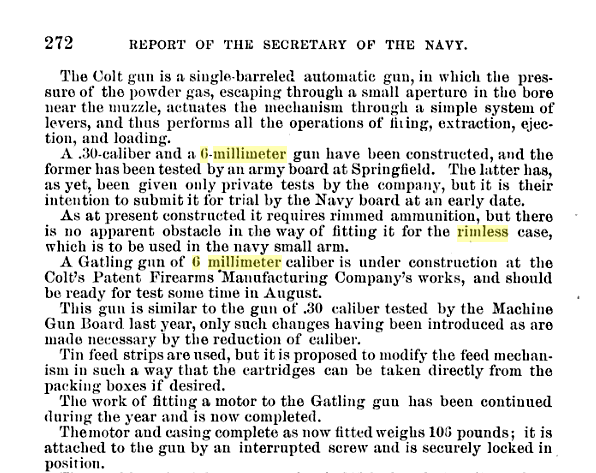
By page 272, the record is clearer that the rimless cartridge has been chosen for production:

BcEx09Z


76fTR1g
According to IAA Forum, 30,000 rounds of .236/6mm Rimmed ammunition were manufactured, most likely in support of the weapons described in the second paragraph of the report.
df5qiYy

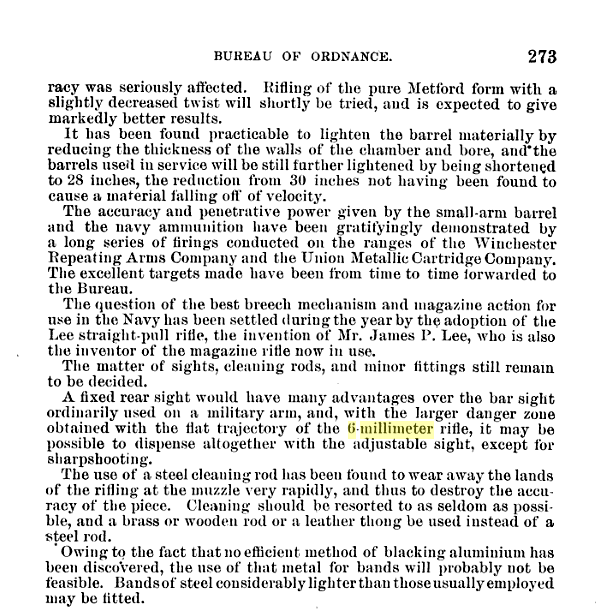
IC0pYFB
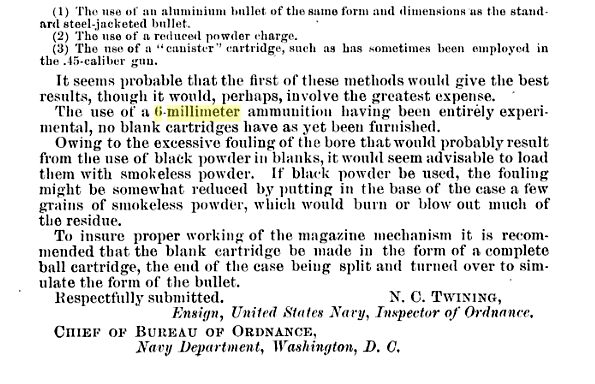
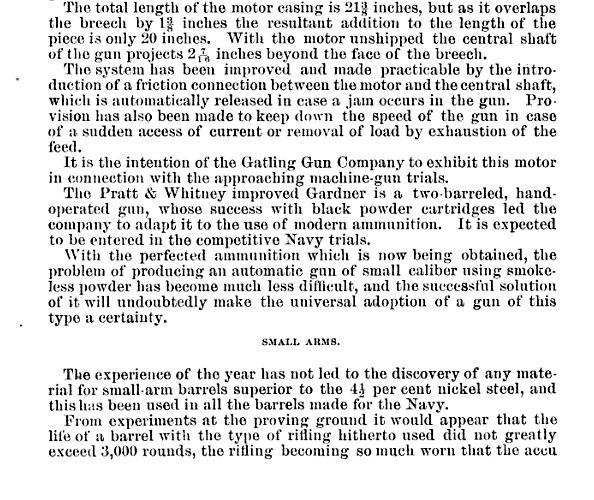
Note that the Navy is already having difficulties with the rifling wearing too quickly. A potential solution is the Metford rifling, adopted by the British for their Lee-Metford rifle in 1885.


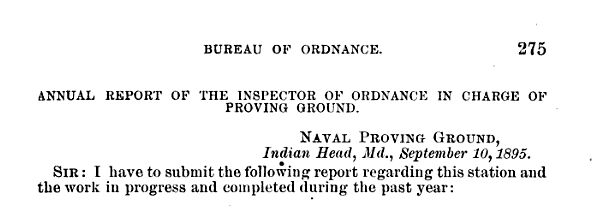
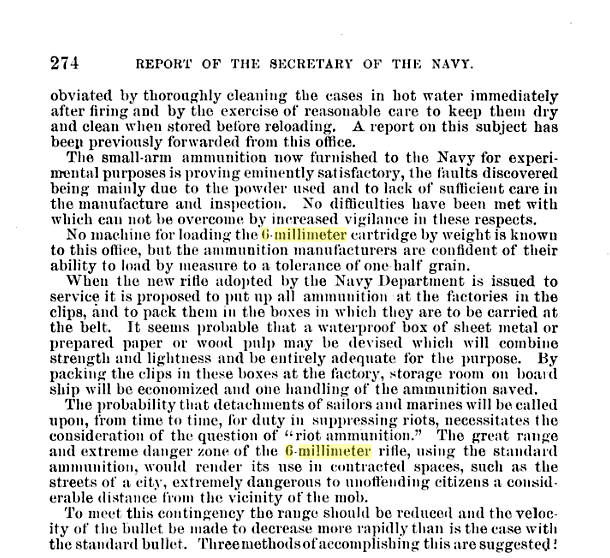
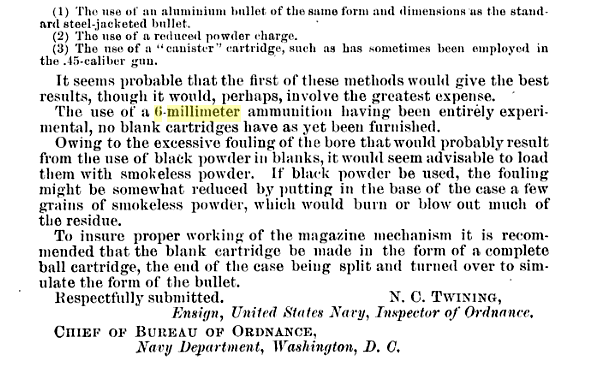
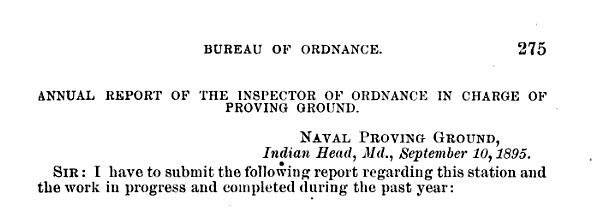
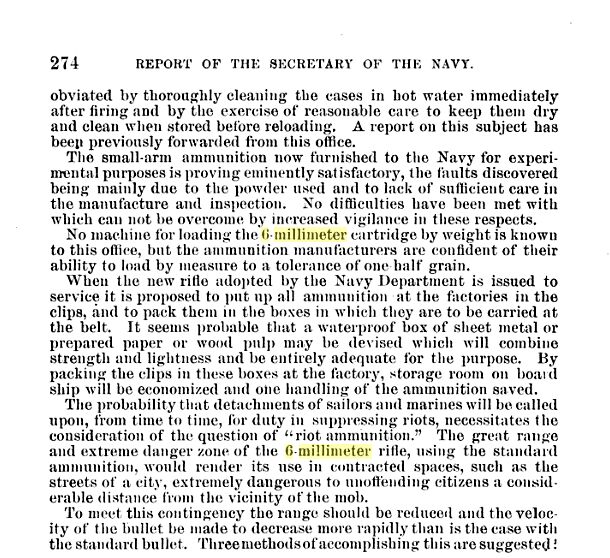
The discussion of ammunition continues on page 274:
EgiMoyV

xwCUZRG

Gmchw0T

Hopefully these documents shed some light on exactly what rounds were being trialed when. It does seem to make clear that the round adopted by the Navy in 1895 was indeed rimless, supporting the explanation for the semi-rimmed .220 Swift that the rim was simply expanded to match the common .473″ bolt face. The rimmed 6mm round itself went on to have a short-lived commercial career, as well, being made for the Winchester 1885 single-shot rifle for a brief time. As far as this author knows, no semi-rimmed 6mm USN ammunition was ever made by official order.

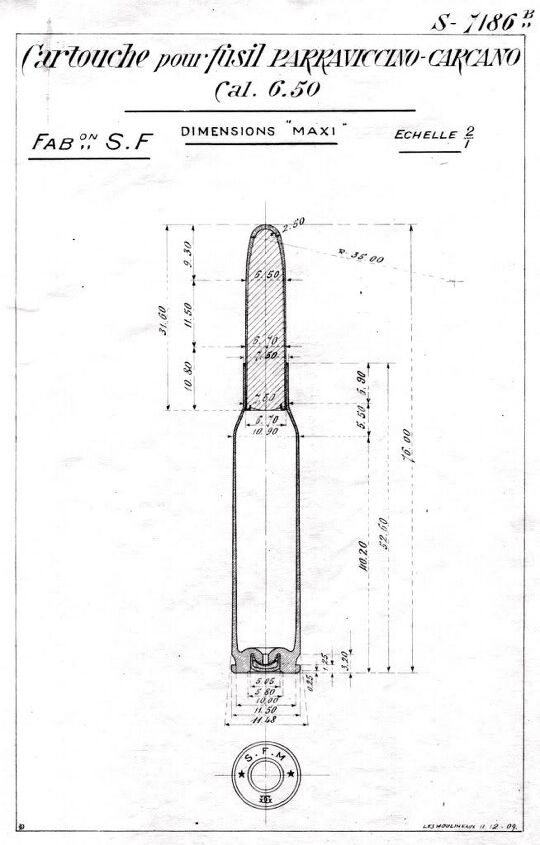
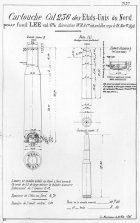
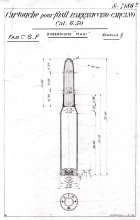
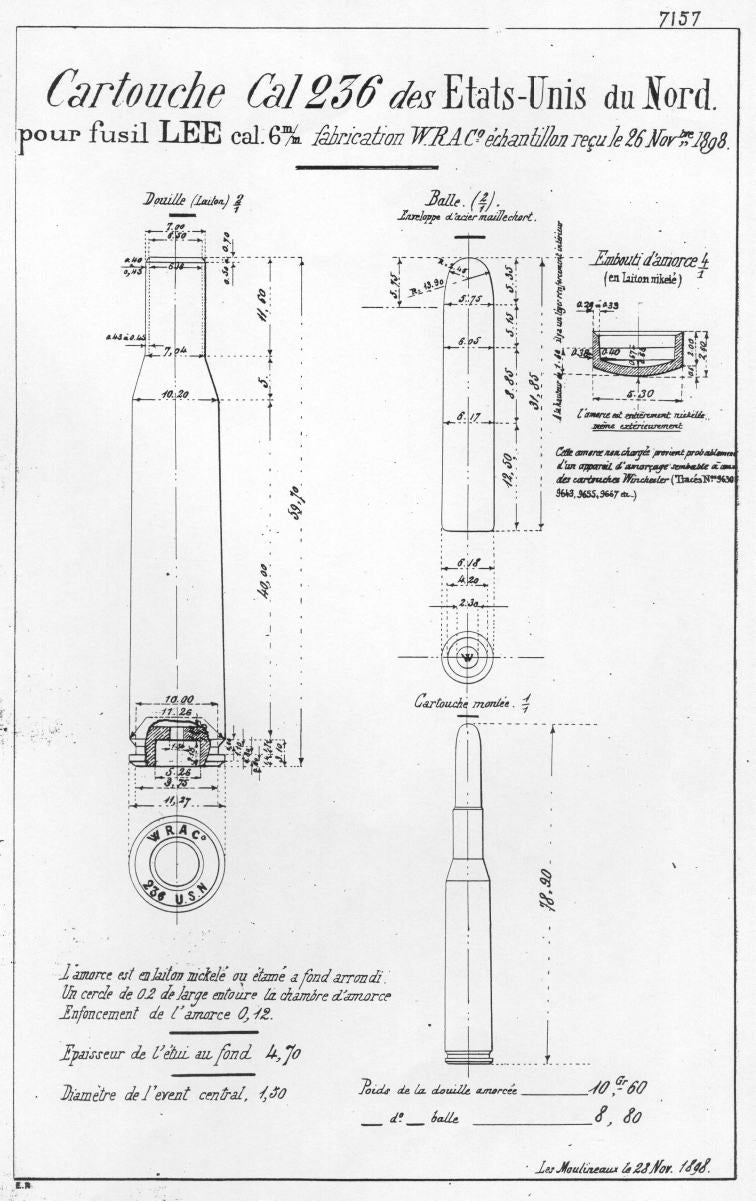
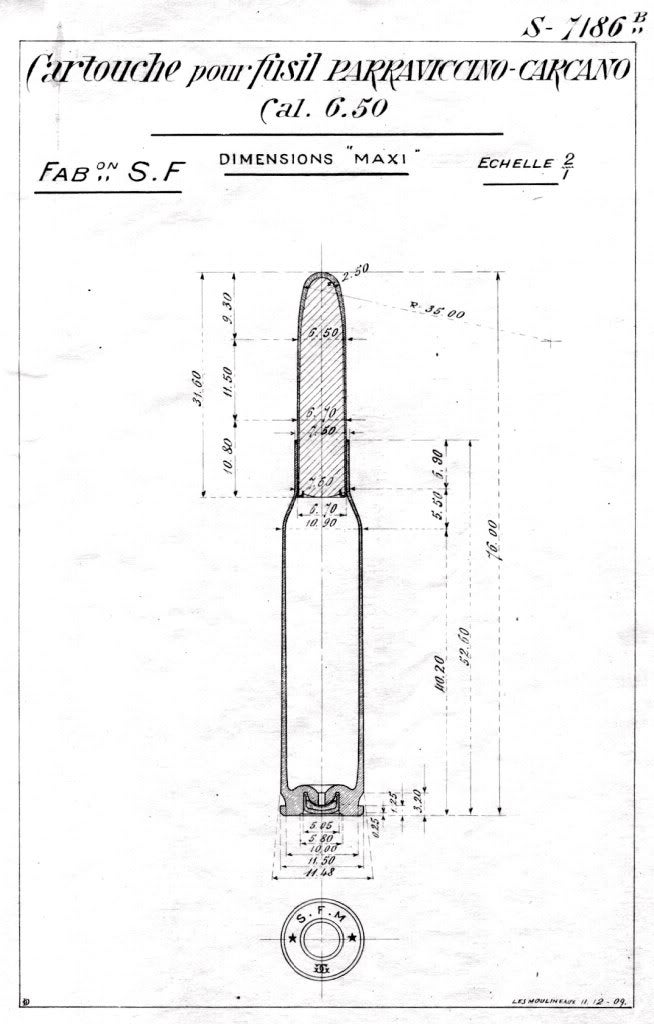
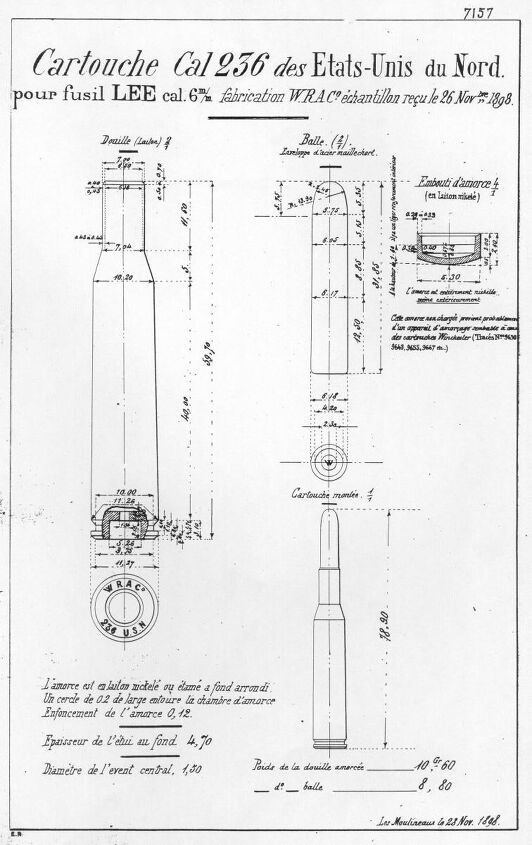
Finally, as for whether the 6mm USN was based on the 6.5 Carcano, we can reference two French cartridge drawings from the period for our answer:
US-(2) 7186B

Both rounds have substantially different rim dimensions. The rim diameter of the 6mm Lee Navy is listed as 11.27mm (.444″), compared to the 6.5 Carcano’s 11.50 (.453″), the Navy round’s rim thickness is 1.4mm, considerably thicker than the 1.25mm rim of the Carcano, and the extractor groove of the 6mm is significantly deeper. While cross-pollination of designs from Europe was certainly possible in this period (as evidenced by the Metford rifling being referenced in the document above), the case head dimensions of the two rounds, evidenced by drawings from the time, just do not match.
 
Very good! Yes it seems so. It makes sense that Winchester made the rim larger, That would have solved the problem of changing bolt faces Etc. Very cool, Learn something new everyday. I have quite a Large cartridge collection of just stuff I have came across over many years, I have yet to come across an actual 6mm Lee Navy round.
This is a rather lengthy explanation but it sets aside the idea that this cartridge was semi-rimmed. The first statement is just following. The second is very nearly the end of the official transcript in red also before the drawings.

Looking at production ammunition for the 6mm Lee Navy, we see that the round the Navy eventually used was indeed rimless, but Wikipedia’s article on the 1895 Winchester-Lee rifle raises the question of what round was initially adopted – was it rimmed or rimless? Fortunately, we can find out for sure by looking at the Annual Report of The Secretary of The Navy from the relevant years of 1894-1895. We see in a discussion of a prototype turn-bolt Luger rifle in late 1894, before adoption, the 6mm Lee Navy was indeed rimmed:

K0Hr7pw
Page 306: Note the date of November 22, 1894. The rimless cartridge referenced is a proprietary 6mm round, unrelated to the Navy project.


ELA1Ud5

Note the discussion of rechambering the Luger rifle to a rimless version of the Navy’s 6mm round, which at this point was still rimmed.


By July of the next year, however, the Navy had not only tested a rimless version, but it seems they had decided on it:

WteHrYS
On page 268, the second paragraph is ambiguous as to whether the rimless version is the current focus of the program or not.


1PBh8OA
The Navy appears to have narrowed its choices down to something. The manufacturers are ready for production, says this paragraph on page 269.


By page 272, the record is clearer that the rimless cartridge has been chosen for production:
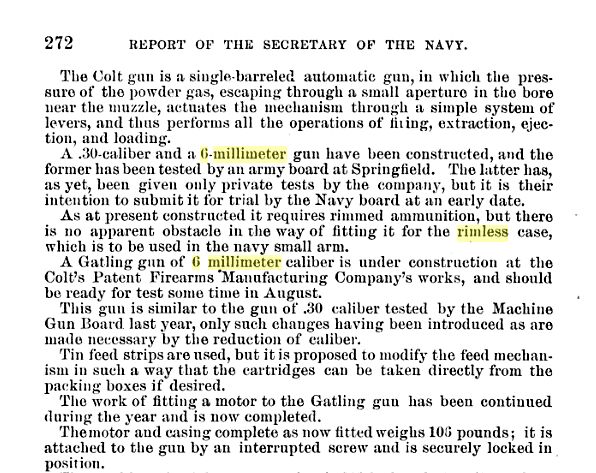
BcEx09Z


76fTR1g
According to IAA Forum, 30,000 rounds of .236/6mm Rimmed ammunition were manufactured, most likely in support of the weapons described in the second paragraph of the report.
df5qiYy

IC0pYFB
Note that the Navy is already having difficulties with the rifling wearing too quickly. A potential solution is the Metford rifling, adopted by the British for their Lee-Metford rifle in 1885.


The discussion of ammunition continues on page 274:
EgiMoyV

xwCUZRG

Gmchw0T

Hopefully these documents shed some light on exactly what rounds were being trialed when. It does seem to make clear that the round adopted by the Navy in 1895 was indeed rimless, supporting the explanation for the semi-rimmed .220 Swift that the rim was simply expanded to match the common .473″ bolt face. The rimmed 6mm round itself went on to have a short-lived commercial career, as well, being made for the Winchester 1885 single-shot rifle for a brief time. As far as this author knows, no semi-rimmed 6mm USN ammunition was ever made by official order.

Finally, as for whether the 6mm USN was based on the 6.5 Carcano, we can reference two French cartridge drawings from the period for our answer:
US-(2) 7186B

Both rounds have substantially different rim dimensions. The rim diameter of the 6mm Lee Navy is listed as 11.27mm (.444″), compared to the 6.5 Carcano’s 11.50 (.453″), the Navy round’s rim thickness is 1.4mm, considerably thicker than the 1.25mm rim of the Carcano, and the extractor groove of the 6mm is significantly deeper. While cross-pollination of designs from Europe was certainly possible in this period (as evidenced by the Metford rifling being referenced in the document above), the case head dimensions of the two rounds, evidenced by drawings from the time, just do not match.

 

Upgrades & Donations

This Forum's expenses are primarily paid by member contributions. You can upgrade your Forum membership in seconds. Gold and Silver members get unlimited FREE classifieds for one year. Gold members can upload custom avatars.


Click Upgrade Membership Button ABOVE to get Gold or Silver Status.

You can also donate any amount, large or small, with the button below. Include your Forum Name in the PayPal Notes field.


To DONATE by CHECK, or make a recurring donation, CLICK HERE to learn how.

Forum statistics

Threads
167,606
Messages
2,236,467
Members
80,616
Latest member
EddieV
Back
Top