Follow along with the video below to see how to install our site as a web app on your home screen.
Note: This feature may not be available in some browsers.
This Forum is for adults 18 years of age or over. By continuing to use this Forum you are confirming that you are 18 or older. No content shall be viewed by any person under 18 in California.
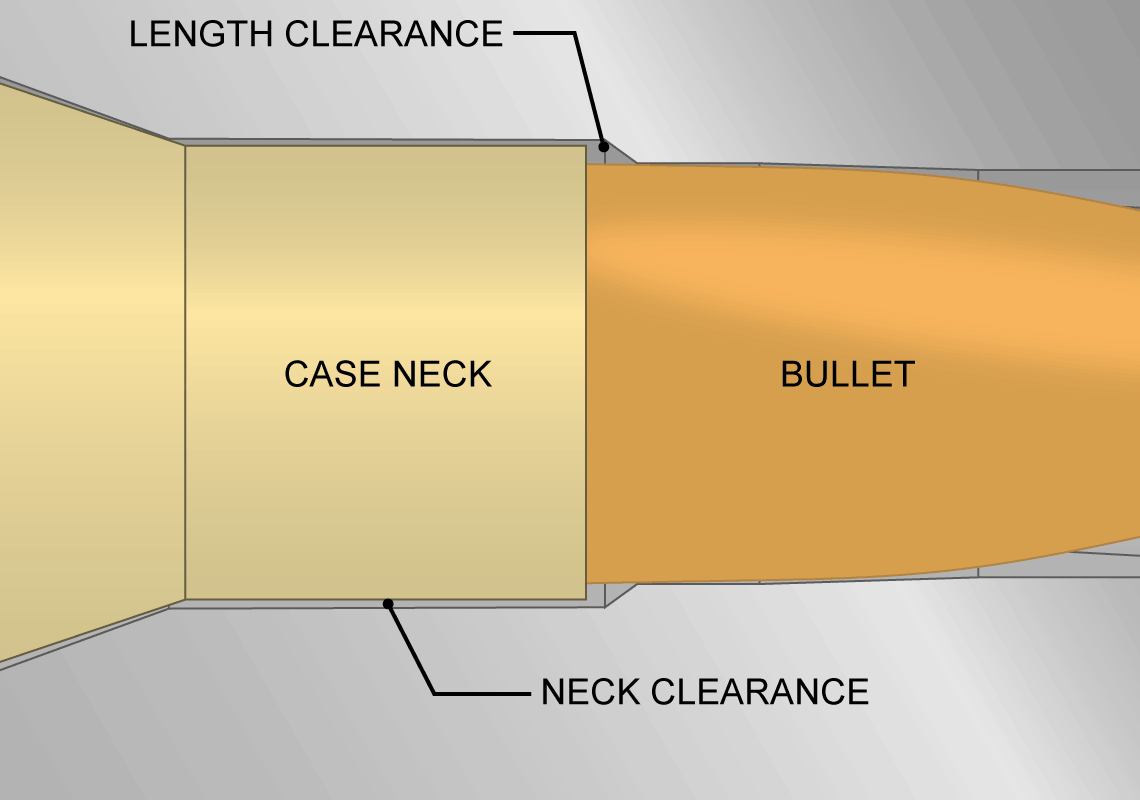
So we have a case which is freely floating in the chamber. Is a bullet sitting in the throat sitting true to the axis of the rifling? Or is it sitting butt end down nose up because the throat is bigger than bullet diameter? More so if bullet is being jumped? If the bullet doesn’t find alignment with the rifling until it has moved forward to contact them it seems hard to me that variances in case neck thickness to the extent less than the release dimension can have any affect on the alignment process. The neck has expanded out of the way in order for the alignment process to even begin.
When you stack plastic cups the tapered shape of the cup aligns all the cups. "And" if the last cup is held and centered by a recessed bolt face the cups wouldn't tilt.
So how much effect does the cone shaped chamber shoulder and the cone shape of the case shoulder effect case alignment and the bullet in the throat. The ejector is pushing the case forward and with a full length resized case the tapered cone shaped shoulder of the case is the only part of the case touching the chamber.
It is also stated that with neck turned brass and not sizing the case neck just above the shoulder the bullet may be even held in better alignment with the bore.
I had a factory Remington 280 with about .006" - .007" head space, I full length sized on a RCBS die set, brass did not last. I learned about neck sizing. I have rifles today that have head space of .001" or less, can't shoulder bump to save my ass with shelf dies. Full length sizing for these seems to be about the same as neck for brass life.
I had a factory Remington 280 with about .006" - .007" head space, I full length sized on a RCBS die set, brass did not last. I learned about neck sizing. I have rifles today that have head space of .001" or less, can't shoulder bump to save my ass with shelf dies. Full length sizing for these seems to be about the same as neck for brass life.
I had a factory Remington 280 with about .006" - .007" head space, I full length sized on a RCBS die set, brass did not last. I learned about neck sizing. I have rifles today that have head space of .001" or less, can't shoulder bump to save my ass with shelf dies. Full length sizing for these seems to be about the same as neck for brass life.
You guys go to a lot of trouble. I've been neck sizing for bolt rifles for 45 years. Works. Now with the sub $300 bolt rifles from several makers and cheapo Lee dies, you can shot outstanding groups for not much moola. Is it the best, likely not, but sure does work for the average Joe. Thanks for all the good reading.
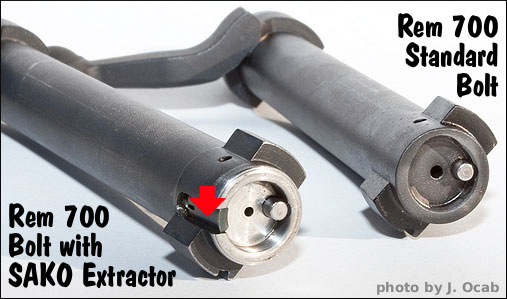
Is this still the case with a Sako style extractor? I was under the impression that extractor claw passed over the rim of case at loading (and prior to firing). It takes very little pressure for the Blaser extractor claw to pass over the case rim. If anything, it would appear to pull the case backwards (and torque it sideways) rather than push it forwards
Ugh I think I’m getting confused between extractor and ejector... but I still feel like the while the ejector is pushing forward the extractor is holding the case back. The net effect being it is being skewed in the chamber given we have slop in CBTS (headspace), neck and jump.
Ugh I think I’m getting confused between extractor and ejector... but I still feel like the while the ejector is pushing forward the extractor is holding the case back. The net effect being it is being skewed in the chamber given we have slop in CBTS (headspace), neck and jump.
Stick a case on the boltface and see how far forward the case can go before the extractor stops it. Its very loose. Extractor doesnt pull it to the face at all
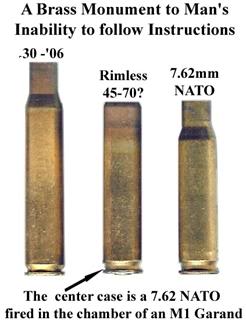
If you look at the center case below, the amount the primer is protruding is how far the extractor let the cartridge move forward. Meaning even at "headspace maximus" the extractor held the case close enough for the firing pin to set off the cartridge.
I had a factory Remington 280 with about .006" - .007" head space, I full length sized on a RCBS die set, brass did not last. I learned about neck sizing. I have rifles today that have head space of .001" or less, can't shoulder bump to save my ass with shelf dies. Full length sizing for these seems to be about the same as neck for brass life.
The probable reason for your brass life problem was that you followed the factory instructions for setting the die. Do you own the proper tool for measuring cases shoulder to head? What tool do you have?
Well for a novice reloader setting up the sizing die as the manufacturer recommends will certainly work. Sort of like using saami dimensions or a saami case gauge. It just isn't the best method for ultimate accuracy or brass life.
If you look at the center case below, the amount the primer is protruding is how far the extractor let the cartridge move forward. Meaning even at "headspace maximus" the extractor held the case close enough for the firing pin to set off the cartridge.
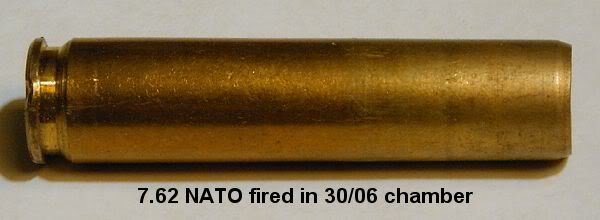
I have seen this because my dad and his friend did this in a M1. Both of the people involved have been gunners and reloaders for over 20 years each. This may be more common than i expected, and that's terrifying. Even worse is that they had a pile of 6 of these cases before they stopped. No alcohol involved.
I believe that the different variations of Harrell's dies for the same caliber are generally different base dimensions. The shoulder set back is of course determined by the user, by how he sets the die in the press.
Well for a novice reloader setting up the sizing die as the manufacturer recommends will certainly work. Sort of like using saami dimensions or a saami case gauge. It just isn't the best method for ultimate accuracy or brass life.
I believe that the different variations of Harrell's dies for the same caliber are generally different base dimensions. The shoulder set back is of course determined by the user, by how he sets the die in the press.
Ok. If this is true, the base diameter is not affected enough to cause a tight fit or bolt closing after three firings. So, should you fire brass until the bolt closure is tight due to the base expanding? This is a totally different situation than when the bolt is tight due to the shoulder needing to be set back-bolt click.
Ok. If this is true, the base diameter is not affected enough to cause a tight fit or bolt closing after three firings. So, should you fire brass until the bolt closure is tight due to the base expanding? This is a totally different situation than when the bolt is tight due to the shoulder needing to be set back-bolt click.
Generally, I use a safe/hot load to fire form cases several times and call that good. For a PPC in a custom action, if the case length and neck clearance are right, you can make some pressure with 133, but I do not think that any amount of 133 that you can get into a 6PPC case, behind a bullet of 68 grains or less would be dangerous. I do these firings to send in neck sizing. On the base diameter, it is a little different from the shoulder. Strictly speaking you do not have to have a case that is fully tight in this area to determine the size of an appropriate die. On the click. I believe that it is not a shoulder tightness issue. When you raise the bolt handle to the top, there is no restraint of the case in that direction. Click is a back of the case thing.
This Forum's expenses are primarily paid by member contributions. You can upgrade your Forum membership in seconds. Gold and Silver members get unlimited FREE classifieds for one year. Gold members can upload custom avatars.

 ... NOT
 !!
!!