• This Forum is for adults 18 years of age or over. By continuing to use this Forum you are confirming that you are 18 or older. No content shall be viewed by any person under 18 in California.

Accuracy Loading - Primer Selection

See if this is readable.

After showing the data for all bullets and weights for the 12 LRP, the second table isolates the data on primers for only one bullet to see if only one bullet weight shows the same results.

The 12 FV rifle is newer and used the data from the 12 LRP so I never even attempted to use Large Rifle primer brass.

This might work better. I left out all the color highlighting.
 

Attachments

The only data you need is the target, numbers mean nothing, just like the lowest E.S and S.D is gonna shoot the smallest, simply not true.
This ^^

In addition to all the fine input on the thread I’ll just add that and following the advice of some range mates of mine, I find that looking at primers over a few powder charges tells me that not all primers like the same charge.
 
Last edited:
Jelenko,
Hopefully the attachment is easier to read.
The labels are on the left column.

I tried to compare each primer type with the group accuracy for as large a number of groups that I shot.
Generally, the BR-4 benchrest CCI primers show better results than the CCI 400s in the 12 LRP rifle.
The small sample of Rem 7.5 benchrest primers show better results than either CCIs. I tried them late in the barrel's life.

After the small sample of good results with the Rem 7.5s, I tried them also with the 12 FV.
I compared each SRP type with the single bullet that they all shot.
The differences in the averages are just about the same.

The results from the second, newer rifle 12 FV show the same data as the data as the 12 LRP but in a slightly different form.
The differences in the averages also are about the same. After seeing that the BR-4s outperformed better than the CCI 400s, I didn't shoot any CCI 400s in the 12 FV.
I showed two different sets of data for the 12 FV because I shot with two different stocks - the factory stock and an Oryx chassis. While the Oryx numbers are better for the 12 FV because the chassis is stiffer, the differences in primer results are about the same percentage wise.

One of the more telling parts of the data is the number of groups under 0.300 5-round average for each primer type. That gives an indication of just how consistent the different primers are.
I accept the fact that my shooting is a factor, but it is about the same for each primer so the comparisons might be helpful.
 
Call me dense between the ears, but I can't really make much sense of the tables previously shown. I am, however, interested in the general outcome of the data, and what you've extrapolated from it. Which primer came out on top, and was the large primer edged out by the small primers? Thanks for spoon-feeding me the summary! Lol :)
 
All the small rifle primers performed better than the large rifle primers in the Savage12 LRP 6.5mm CM rifle.
The CCI 400s were outperformed by the CCI BR-4s with a very large sample in both rifles across all bullets by about 11.5% and in comparison to one bullet Hornady ELD-M 140 gr that were shot with all small rifle primers by about 14%.
The group sizes for the BR-4s averaged 0.352 and the 400s averaged 0.381.
The Remington 7 1/2 benchrest primers performed better than all of them (a very small sample in the 12 LRP with a 0.274 average).

I have also shot the BR-4s and Rem 7 1/2s in a 12 FV .223 rifle. Since I had the data on the 12 LRP, I didn't bother shooting the CCI 400s in the 12 FV.
The Rem 7 1/2s average group size (0.307) was 6.5% better than the BR-4 primers (0.329).

The Rem 7 1/2s (44.3% of all groups under 0.300) also shot 11.85% more groups under 0.300 inches than the BR-4s (32.5% of all groups under 0.300).
That would indicate that the Rem 7 1/2 were more consistent than the BR-4s.
 
My last primer change was simply a lot number change. New lot was 10fps faster and about .006" taller. Group size stayed about the same over 200rds in groups from 5rds to 20rds, from 100y to 1000y. But my SD went down about 1.5fps, which going from 6 to 4.5 shrunk my vertical dispersion at long range. Though either one will net equal scores as there are much bigger factors at long range.

I did find out that a certain primer brand I was using with one powder was not able to reliably ignite the next powder I switched to. Ever so slight hang fires. Since I couldn't get the previous powder anymore, I had to switch primer brands, too.
 
I have no doubt that if one wants to achieve the ultimate in precision as benchrest competitors need to do, primer selection and testing have to be part of the load development process.

However, due to lack of patience, cost considerations, hatred for the tediousness of the load development process given the preponderance of combinations, I am guilty of selecting one primer and staying with it. I like Federal match primers with Remington 7 1/2's for small rifle primers a close second.

My rational has always been to establish a minimum precision standard I need for my application which is varmint and predator hunting. This does require a fair degree of precision. My standard has been 1/2 to 5/8" moa for these applications plus a bullet designed to perform on these critters with velocity considerations.

Once I hit on a combination that meets these criteria, I stop testing and move to practical practice to hone my shooting skills and thoroughly test the load under field conditions. This keep the sport enjoyable for me since I hate load development.

With all that said, what I've learn is almost 60 years of precision reloading, albeit, for my application, is that the most influential component affecting precision is the bullet selected followed by the powder. The powder choice is usually much easier since, historically, there are a range of powders known to work well for certain calibers. However, I prefer extruded powders for field applications since they seem to be more tolerate of temperature changes and more tolerate of slight charge changes.

With the high cost of components and the supply chain availability issues of recent years, the quicker I can get to a qualified serviceable load then inventory components to permit mass production of that load, the better it is for me.
The fact you like Fed Match, and REM 7-1/2's, weeds out a lot of time ;) Those are great primers.
 
Call me dense between the ears, but I can't really make much sense of the tables previously shown. I am, however, interested in the general outcome of the data, and what you've extrapolated from it. Which primer came out on top, and was the large primer edged out by the small primers? Thanks for spoon-feeding me the summary! Lol :)
I believe some people take this sort of thing to a NASA Scientist approach
which is fine,
Not against it myself
Although, the time spent to me has to be valuable, meaningful,
So for years I read only targets
What did the ultimate judge and jury tell me
Well it told me a certain primer works better with that powder right
------
Now, I am at a lets say Plateau, where the onky way to get better, is to get more scientific and technical with my approach of reloading strategy and tactics
Which means, getting more data
Taking more data
Logging more data
finding patterns
Patterns that repeat
Patterns that are MORE meaningful than JUST the target
Why did that load produce a much better group for instance
Was it the Brass weight itself (internal volume)
Was it the wight matched closely to the optimum burn characteristics of the powder and primer used
Not even brass being weight matched itself
But the internal volume best matched to the burn characteritics
So cull the good grouping brass and analyze it etc
Analyze the primers which showed a pattern, weight, size, seat depth, amount of crush
burn characteristics. etc
What it the common factor that makes them more accurate than another
---
So I know there are others who likely take this sort of thing to another level past what I personally do
That is more dependent upon ones own individual accuracy requirements of tghwir rifle.
I have my requirements for what is allowable for my guns.
That is stepping up now after years of keeping those same requirements at the same level.
IE: I see room to Improve
But for me I like to call these things
"Secrets of the trade"
There are some things that matter more than others, Deburring flash holes matters more than uniforming primer pickets for example.
And finding the things that matter most, as well as the things that help squeeze out another 1/10th inch in our group size, .....seperate some shooters.... from most shooters.
---
So some of us are doing the work for everyone else
Which is why they are secrets of the trade
Some of these things you just don't hear about unless someone tells you or you consider it for yourself in a lightbulb revealtion of sudden understanding something deeper is going on.
I am merely posting some obvious results I have found that may matter to some
This may be every day things for others who have already known them for years.
But we're all at different levels of understanding reloading and development.
---
Not suggesting everyone will get the same results I have... but may help some "Out think" their load development
---
"If I have 8 hours to chop down a tree, I will spend 7 hours sharpening my Axe"

 
My last primer change was simply a lot number change. New lot was 10fps faster and about .006" taller. Group size stayed about the same over 200rds in groups from 5rds to 20rds, from 100y to 1000y. But my SD went down about 1.5fps, which going from 6 to 4.5 shrunk my vertical dispersion at long range. Though either one will net equal scores as there are much bigger factors at long range.

I did find out that a certain primer brand I was using with one powder was not able to reliably ignite the next powder I switched to. Ever so slight hang fires. Since I couldn't get the previous powder anymore, I had to switch primer brands, too.
THAT, would frustrate the heck out of me and send me thinking for a month straight how to outthink my load again haha
Luckily, one of my ELR rifles has shown to be very conistent with the primer and powder I have chosen for the past 20 years, (One reason I chose it)
At one point that powder was unavailable for over a year,
I did not even shoot the rifle for that time, because everything was so perfected it would be a waste of barrel life finding another useable powder , load etc, not to mention the time involved in a whole new load workup that is different than something that has repeated so well for so long.
if that suddenly changed, I would be ,,,,(words dont describe)
 
THAT, would frustrate the heck out of me and send me thinking for a month straight how to outthink my load again haha
Luckily, one of my ELR rifles has shown to be very conistent with the primer and powder I have chosen for the past 20 years, (One reason I chose it)
At one point that powder was unavailable for over a year,
I did not even shoot the rifle for that time, because everything was so perfected it would be a waste of barrel life finding another useable powder , load etc, not to mention the time involved in a whole new load workup that is different than something that has repeated so well for so long.
if that suddenly changed, I would be ,,,,(words dont describe)
Thats the difference, I'm a competitive shooter (I take it seriously, though I'm not sure I'm a serious competitor, lol) and I can't waste barrel life testing every last variable to the Nth degree. I noted the difference between lots, ran a short powder ladder again, then immediately took that load to a 1000y club match for confirmation. My criteria is consistency. Does the load shoot the same from 8am to 2pm and still give me a wide tune window with similar elevation. I'll gladly shoot a 0.3-0.4moa load that repeats through a half grain of charges over the 0.1moa load that blows up going 0.1gr either way. I compete for both precision and accuracy.
 
get em while they are cheap
You mean like the 24 cents @/$240 per 1’000 that I just had to pay for some CCI 200’s {out of stock for months and sold out within 5 days with next delivery unknown} or perhaps the $199 per thousand for the White River & at a bargain for RWS which usually were $226 per thousand…??
At least I never have a problem getting AR2208 {Varget}… Just wish I could buy it here where it is made, as cheaply as you can in the USA… :confused:
I figure powder costs about 1 cent per grain…
 
Last edited:
You mean like the 24 cents @/$240 per 1’000 that I just had to pay for some CCI 200’s {out of stock for months and sold out within 5 days with next delivery unknown} or perhaps the $199 per thousand for the White River & at a bargain for RWS which usually were $226 per thousand…??
At least I never have a problem getting AR2208 {Varget}… Just wish I could buy it here where it is made, as cheaply as you can in the USA… :confused:
I figure powder costs about 1 cent per grain…
FYI -
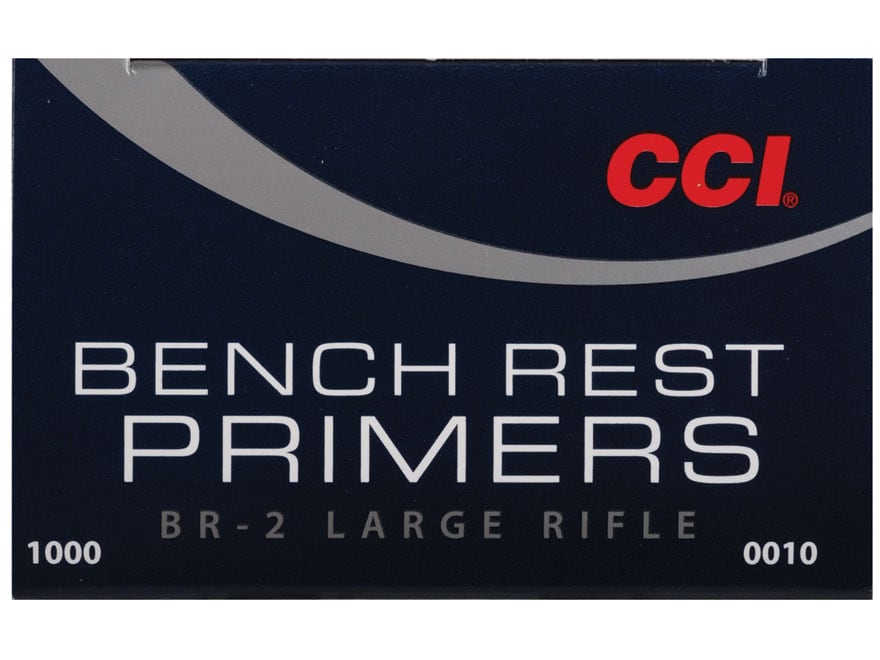
CCI200 and BR-2 are the same, just BR-2 are more consistent in weight
Edit: didn't know you were outside the US, my mistake
Dang those prices would cut my shooting way down

 
Last edited:
consistency. over the 0.1moa load that blows up going 0.1gr either way. I compete for both precision and accuracy.
There's loads that do that?
Is that with the PPC guys? I've never been a PPC fanboy myelf so have not explored the delicate sensitive types of loads where a guy has to increase powder charge by 0.1 grn to so to speak
"Stay in Tune"
So i have never experienced that myself neither
Isn't that with the Upper Velocity Nodes as well?
Which I also try to stay away from since I find the middle of the road nodes the more forgiving ones.
I stopped chasing max cartridge Velocity years ago in trade for day in day out,
1200 ft or 6500 ft elevation consistency
Being a Long Range shooter for the most part- I usually stop just like yourself
When I arrive at a load that shoots in the 0.3's day in and day out, night or day,
summer or winter and can predictably dial in for 600 and have it be the same.
I'm happy and my criteria for accuracy has been met.
 
Last edited:
Often times you can find a very small node at the bottom of barrel swing, the anti-node if you will, that shoots tiny but is very sensitive to changes. Ive seen shooters pick it due to incomplete or incorrect load testing. I've seen it more with cartridges that use faster burning powders, but if you shoot a narrow ladder of charges and don't get to the top of the barrel swing, it will look like the load to choose.
 
FYI -
CCI200 and BR-2 are the same, just BR-2 are more consistent in weight
Edit: didn't know you were outside the US, my mistake
Dang those prices would cut my shooting way down

The CCI BR-2 primers have not been available for nearly a year… I do weigh primers to sort into consistent weight groups.
I stocked up on their 450’s a few years ago when the price started to blow out and then All CCI stock dried up for years and only in the past year has supply trickled back onto the market.
That applied for all primers and especially Lg ones, many folks just had to stop shooting anything requiring large rifle primers or at one point any type of primers unless they had their own stock.
 

Upgrades & Donations

This Forum's expenses are primarily paid by member contributions. You can upgrade your Forum membership in seconds. Gold and Silver members get unlimited FREE classifieds for one year. Gold members can upload custom avatars.


Click Upgrade Membership Button ABOVE to get Gold or Silver Status.

You can also donate any amount, large or small, with the button below. Include your Forum Name in the PayPal Notes field.


To DONATE by CHECK, or make a recurring donation, CLICK HERE to learn how.

Forum statistics

Threads
167,721
Messages
2,239,101
Members
80,704
Latest member
EKYHUNTER
Back
Top