Follow along with the video below to see how to install our site as a web app on your home screen.
Note: This feature may not be available in some browsers.
This Forum is for adults 18 years of age or over. By continuing to use this Forum you are confirming that you are 18 or older. No content shall be viewed by any person under 18 in California.
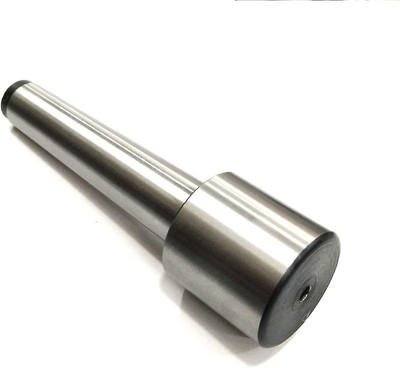
I made a MT -2 taper for my tailstock for the floating reamer holder I made. I like it because it's not hand-held and allows for any alignment issues in all 3 axis.
Cuts concentric, on size chambers when I check them so that's everything I need.
Overall, the soft machinable blank arbor is a versatile and customizable tool essential for machinists and manufacturers seeking precision and flexibility in their machining processes. Material : Typically made from soft machinable materials alloy tool Steel.
I made a MT -2 taper for my tailstock for the floating reamer holder I made. I like it because it's not hand-held and allows for any alignment issues in all 3 axis.
Cuts concentric, on size chambers when I check them so that's everything I need.
As I recall, I sent you pics. I'm not going to put them on the Forum because those who don't understand there are 3 axis are gonna 'loose their stuff'.
I searched a bit, that's what led me to this old thread.
It's hard to find much info on rigid reamer set ups. I know there's more than one way to skin the cat, I was curious if there was a common preference among people running rigid reamer set up. I'm guessing it's gonna be just try it a few ways and see what you like but I'd also rather not blindly shove a rigid reamer into a barrel.
I found this 130 page document on chambering so I've got some reading to do.
Also apologies to everyone who's getting "Like" notifications from super old threads.
I searched a bit, that's what led me to this old thread.
It's hard to find much info on rigid reamer set ups. I know there's more than one way to skin the cat, I was curious if there was a common preference among people running rigid reamer set up. I'm guessing it's gonna be just try it a few ways and see what you like but I'd also rather not blindly shove a rigid reamer into a barrel.
I found this 130 page document on chambering so I've got some reading to do.
Also apologies to everyone who's getting "Like" notifications from super old threads.
It's hard to find much info on rigid reamer set ups. I know there's more than one way to skin the cat, I was curious if there was a common preference among people running rigid reamer set up.
I'm guessing you're not going to find much on rigid setups because most use some sort of floater. There is someone on here with I think a HAAS that posted his setup and some video in the recent ish past. I can't recall his name at the moment.
So after doing another barrel yesterday. I got frustrated with the nut on the QCTP for my height adjustment.
I took an import boring head I had in the shop and turned it into a vertical height micro adjuster.
This rigid reaming gizmo is really coming together.
I also made an extension arm for holding my indicator. This allowed me to check the front and the back of the reamer for alignment.
To speed up the alignment process even more I am ordering another 1/10 indicator. One will ride on the pilot the other on the shank infront of the collet. This will prevent all the sweeping back and...
I'm guessing you're not going to find much on rigid setups because most use some sort of floater. There is someone on here with I think a HAAS that posted his setup and some video in the recent ish past. I can't recall his name at the moment.
So after doing another barrel yesterday. I got frustrated with the nut on the QCTP for my height adjustment.
I took an import boring head I had in the shop and turned it into a vertical height micro adjuster.
This rigid reaming gizmo is really coming together.
I also made an extension arm for holding my indicator. This allowed me to check the front and the back of the reamer for alignment.
To speed up the alignment process even more I am ordering another 1/10 indicator. One will ride on the pilot the other on the shank infront of the collet. This will prevent all the sweeping back and...
Dustin Drews is his name, Pretty fart smeller, He made a rigid reamer holder for his Haas using a criterion knockoff boring head so he could use it to dial in the reamer straight.
Dustin Drews is his name, Pretty fart smeller, He made a rigid reamer holder for his Haas using a criterion knockoff boring head so he could use it to dial in the reamer straight.
That works for me. Seriously. If the lathe is straight, which mine is, there's no reason to use a floating reamer holder unless you're not willing to take the time to dial in the barrel perfectly. I use an ER collet chuck in the tail stock and yes I spent a long time to convince myself it was holding the reamer on center and I take however long it takes to dial in the barrel. A floating holder compensates for slop in the setup. It achieves this by being sloppy. Float = slop. If I had a lathe that wasn't true or I was trying to bang out lots of barrels and needed to speed up the process I might be tempted to go with a floating reamer holder but that's not where I'm at. Not saying you can't giterdun with a floating holder, just saying that a rigid holder works too if the lathe is true and the operator is skilled.
That works for me. Seriously. If the lathe is straight, which mine is, there's no reason to use a floating reamer holder unless you're not willing to take the time to dial in the barrel perfectly. I use an ER collet chuck in the tail stock and yes I spent a long time to convince myself it was holding the reamer on center and I take however long it takes to dial in the barrel. A floating holder compensates for slop in the setup. It achieves this by being sloppy. Float = slop. If I had a lathe that wasn't true or I was trying to bang out lots of barrels and needed to speed up the process I might be tempted to go with a floating reamer holder but that's not where I'm at. Not saying you can't giterdun with a floating holder, just saying that a rigid holder works too if the lathe is true and the operator is skilled.
There's not many lathes that are perfect enough to not make the reamer a boring bar. Bruce Thom completely rebuilt his Japanese lathes, Re-grinding and scraping, Shimming everything to get them dialed in to perfection, Lathe ways are induction hardened, I've never seen a tailstock that says induction hardened, Tails tocks wear a miniscule amount every time you slide them.
There's not many lathes that are perfect enough to not make the reamer a boring bar. Bruce Thom completely rebuilt his Japanese lathes, Re-grinding and scraping, Shimming everything to get them dialed in to perfection, Lathe ways are induction hardened, I've never seen a tailstock that says induction hardened, Tails tocks wear a miniscule amount every time you slide them.
Gospel.
NEW machines typically leave the factory with the ts a couple of thou high by design to allow for inevitable wear.
And the bases don't wear evenly- front wears faster resulting in a downward pitch to the ts barrel. Not enough to matter unless you're attempting "this".
I saw another guys set up, He had bolted and keyed a solid block to his cross slide. He used an allen key to bottom the cross slide against the hand wheel and locked it down. Then used the chuck to drill and bore a hole into that block to hold the reamer and then some set screws.
If a person was worried about differences on the reamer shanks you could put an MT in the block and then shrink fit your reamers into MT blanks,
I believe there are lots of "clever" ways to hold a rigid reamer on a manual machine, because there inherently isn't a good way to do it.
Your lathe probably isn't as straight as you think it is. Is your bed flat to a tenth? Does your tailstock ram track perfectly straight, to the tenth? Is your spindle perfect? Does the machine vibrate when you run it? Etc. A tenth here and a tenth there adds up quick.
I firmly believe if your barrel is set up and dialed correctly and pre-bored, a GOOD floating holder will get you the best result. I'll lump a pusher into that same statement.
I'm not saying you can't get a rigid set up on your machine, but I think it's a lot more work, measuring, and validating than you need. I want to spend my time cutting steel, not setting up a bunch of dial indicators and verifying everything every time.
This Forum's expenses are primarily paid by member contributions. You can upgrade your Forum membership in seconds. Gold and Silver members get unlimited FREE classifieds for one year. Gold members can upload custom avatars.