• This Forum is for adults 18 years of age or over. By continuing to use this Forum you are confirming that you are 18 or older. No content shall be viewed by any person under 18 in California.

Is there an alternative to the Accuracy One Seating Depth Comparator?

we don’t have transparent chambers, but when we size cases for our comp chambers we’re creating about .002 headspace, putting that into perspective that’s approx a human hair between the bolt face and case head, when the firing pin strikes the primer the combustion begins, now whether the pin drives the case forward or instantaneous expansion forces the case shoulder to the chamber shoulder doesn’t really matter because the fact remains it gets there and when .001 difference in seating depth can change the long range target I want to be confident of accurate and consistent seating depth from shoulder to ogive.

Do you have a seating die system that indexes off the shoulder?
 
Do you have a seating die system that indexes off the shoulder?
Yes. https://www.superior-precision.com/Buller-Seater/

Per some of the other comments....it is not necessarily true that the firing pin pushes the cartridge forward but I have read that over and over again so it's not surprising to read it again. For those that jump their bullets and have a standard spring loaded ejector built into the bolt face (which is most actions) the ejector pushes the case forward while you are closing the bolt so the case has already been pushed forward before you pull the trigger. If you have an action without an ejector built into the bolt face or if you jam your bullets then yes, the firing pin pushes the case forward.
 
I don't really know what to say to you at this point.
It's been explained fairly well in my opinion. I've used the shoulder method for several years and used it in competition with a fair amount of success.

I can honestly look back and see where this method brought an incredible increase in seating consistency and my match results noticably improved at the same time.

Yet you as a person who clearly has never tried it and doesn't understand it continues to tell people they are wrong and your way is better.

im just going to say I disagree with everything you say above in this post because I have used both methods being discussed and can speak from experience.

The shoulder is more of a constant than the entire case concerning the touch point/ogive

The distance between the ogive and shoulder is much shorter than the case base to ogive, that alone makes it more consistent and eliminates any inconsistencies between the shoulder and the base.
I looked at the Accuracy one tool and even watched a video of its use
I get it, and its a nice tool and another way of skinning the cat - A viable method
---
Allow me to explain a little further since Im not Knocking it its just that the OP asked of there is
"An Alternative to it"
So I listed an alternative, and a cheaper one at that
---
As well myself, being a machinist and having all sorts of measuring tools including depth measuring
If I wanted another method of doing this, I would just use one of my various tools
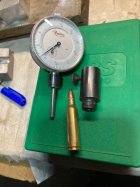
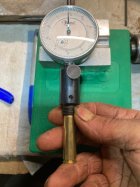
I will show a picture of something I went and looked in my tool drawer and thought I could whip together the same thing in effect in about 5 minutes
---
I am more the type who doesnt buy things I see to be needless
other people Love buying new gadgets
And thats fine,
---
However, My main contention is when measuring or checking on the Ogive of the bullet
the only real accurate place to index off from is where the ogive touches the lands
The Sinclair nut Does this.
If a tool is indexing from any other point further up the bullet to the tip there will be variations
IE: When measuring base to ogive on bullets such as 6mm it is proper to use the 6mm hole on the comparator for example using
"the correct hole dia. for the bullet being loaded"
---
Now if I use a .22 hole to measure on a 6mm bullet, the ogive up further is not as consistent due to how the bullets ogive curve is formed
and I would get larger variations the further up toward the tip I index from.
Similar to how we can also have bullets with consistent base to ogive, but inconsistent OAL.
So unless the tool is indexing in the .237" range for a 6mm bullet...
I dont see how consistency can be improved when further up the ogive toward the tip has shown to have larger differences as we go up the tip.
If we measure where the bullet is reducing down in diameter from where the Ogive actually meets the rifling, I would see larger difference in the indicator reading.
I First noticed this type of variation with a seating die stem being small in diameter in the hole that the bullet tip fits into, Yet when I measured base to Ogive on the bullet, they all measured the same
How can there be a difference then in seating depth?
I enlarged the stem hole dia, and seating depth consistency came back.
---
there is a reason say with the Sinclair nut, we would not want to use the 22 hole for 6mm bullets
even though we could index at that reduced dia. on the bullet and get some kind of readings.
---
I do not see where the Accuracy One tool has inserts for different bullet diameters
(Perhaps I missed this?) to be able to index from and measure in the proper place on the ogive,
IE: the dia. where the lands would be touching the bullet.
---
So real quick instead of spending $150 bucks I just went into my machinist box and whipped this up and tried it out
I do see the speed of using such a tool
----------------------------------------
However again,
I do not see the importance of checking Seating Depth for every single cartridge
meaning if we did check every single case we loaded , sure, I think Id switch over to that tool
But What I see in my loading room with my tools and dies is
Once I get my seating die adjusted to the seating depth I want
It does not change
Meaning there is no reason to keep checking seating depths for every single round being loaded
Once set, we can now load 100 rounds without checking again
So when I use the Sinclair nut, I maybe only check the first 3 rounds for consistency, then go to loading the rest, then will check the last one for insurance nothing changed.
So that's 4 times used for 100 rounds loaded. Does a guy really need to speed that up ?
If so, fine. use the different tool.
-----------------------------------------
ALSO and this very important to consider
I DO USE - a concentricity gauge for every loaded round
If the seasting depth were off at all, the concentricity gauge would read a different number than it should
If the ogive is different in curve, the concentricity gauge shows a different number
When all loaded rounds are at the same seating depth
the concentricity gauge itself reveals the same number on the indicator
So again, Once I load my first few rounds and check initial seting depth
---Seating depth tools are not touched again for that loading session negating the need to check every single loaded round since it is the concentircity gauge which allows redunduncy of double checking.
---
A TDC Depth Indicator can be used as the same tool and index off the shoulder
but I believe the hole the bullet fits into on the gauge should be the approriate dia for the ogive and dia of bullet used for the best measurement of consistency.
All I would have to do for that on the TDC checker is whip up an insert for different bullets
---
Does the Accuracy One tool, have different inserts for different Dia. Bullets? to ensure proper consistency?

 

Attachments

  • IMG_5546.jpg
    IMG_5546.jpg
    63.2 KB · Views: 32
  • IMG_5547.jpg
    IMG_5547.jpg
    64 KB · Views: 32
  • IMG_5548.jpg
    IMG_5548.jpg
    59.6 KB · Views: 32
Last edited:
I looked at the Accuracy one tool and even watched a video of its use
I get it, and its a nice tool and another way of skinning the cat - A viable method
---
Allow me to explain a little further since Im not Knocking it its just that the OP asked of there is
"An Alternative to it"
So I listed an alternative, and a cheaper one at that
---
As well myself, being a machinist and having all sorts of measuring tools including depth measuring
If I wanted another method of doing this, I would just use one of my various tools
I will show a picture of something I went and looked in my tool drawer and thought I could whip together the same thing in effect in about 5 minutes
---
I am more the type who doesnt buy things I see to be needless
other people Love buying new gadgets
And thats fine,
---
However, My main contention is when measuring or checking on the Ogive of the bullet
the only real accurate place to index off from is where the ogive touches the lands
The Sinclair nut Does this.
If a tool is indexing from any other point further up the bullet to the tip there will be variations
IE: When measuring base to ogive on bullets such as 6mm it is proper to use the 6mm hole on the comparator for example using
"the correct hole dia. for the bullet being loaded"
---
Now if I use a .22 hole to measure on a 6mm bullet, the ogive up further is not as consistent due to how the bullets ogive curve is formed
and I would get larger variations the further up toward the tip I index from.
Similar to how we can also have bullets with consistent base to ogive, but inconsistent OAL.
So unless the tool is indexing in the .237" range for a 6mm bullet...
I dont see how consistency can be improved when further up the ogive toward the tip has shown to have larger differences as we go up the tip.
If we measure where the bullet is reducing down in diameter from where the Ogive actually meets the rifling, I would see larger difference in the indicator reading.
I First noticed this type of variation with a seating die stem being small in diameter in the hole that the bullet tip fits into, Yet when I measured base to Ogive on the bullet, they all measured the same
How can there be a difference then in seating depth?
I enlarged the stem hole dia, and seating depth consistency came back.
---
there is a reason say with the Sinclair nut, we would not want to use the 22 hole for 6mm bullets
even though we could index at that reduced dia. on the bullet and get some kind of readings.
---
I do not see where the Accuracy One tool has inserts for different bullet diameters
(Perhaps I missed this?) to be able to index from and measure in the proper place on the ogive,
IE: the dia. where the lands would be touching the bullet.
---
So real quick instead of spending $150 bucks I just went into my machinist box and whipped this up and tried it out
I do see the speed of using such a tool
----------------------------------------
However again,
I do not see the importance of checking Seating Depth for every single cartridge
meaning if we did check every single case we loaded , sure, I think Id switch over to that tool
But What I see in my loading room with my tools and dies is
Once I get my seating die adjusted to the seating depth I want
It does not change
Meaning there is no reason to keep checking seating depths for every single round being loaded
Once set, we can now load 100 rounds without checking again
So when I use the Sinclair nut, I maybe only check the first 3 rounds for consistency, then go to loading the rest, then will check the last one for insurance nothing changed.
So that's 4 times used for 100 rounds loaded. Does a guy really need to speed that up ?
If so, fine. use the different tool.
-----------------------------------------
ALSO and this very important to consider
I DO USE - a concentricity gauge for every loaded round
If the seasting depth were off at all, the concentricity gauge would read a different number than it should
If the ogive is different in curve, the concentricity gauge shows a different number
When all loaded rounds are at the same seating depth
the concentricity gauge itself reveals the same number on the indicator
So again, Once I load my first few rounds and check initial seting depth
---Seating depth tools are not touched again for that loading session negating the need to check every single loaded round since it is the concentircity gauge which allows redunduncy of double checking.
---
A TDC Depth Indicator can be used as the same tool and index off the shoulder
but I believe the hole the bullet fits into on the gauge should be the approriate dia for the ogive and dia of bullet used for the best measurement of consistency.
All I would have to do for that on the TDC checker is whip up an insert for different bullets
---
Does the Accuracy One tool, have different inserts for different Dia. Bullets? to ensure proper consistency?

Correct, measuring from where the bullet contacts the lands is the better solution. When most people use the word ogive it seems like they mean where the tip transitions to the max diameter but there's a lot of places on the bullet that have that diameter so it's practically impossible to locate that point precisely and repeatably. There is only one place on the bullet where the diameter = bore diameter so I use that.
 
This has been an educational thread for me. I was going to quote several of you, but decided it would be simpler to just thank everyone who took the time to kindly explain what the theory is behind the tool and why you think it matters. The responses have been well thought out and well phrased, so thanks for that. It certainly gives me more to think about which is why I try to keep an open mind about things that have the potential to help my game.

As background, I have some BR guns that I use for short range stuff. I also have a gun I use for short range that is built on a long range stock in case that itch needs scratched. I have not given in to it yet, but that is subject to change. I have guns both with and without ejectors. When loading for my my PPC and 30BR, it is quite typical for me to have my seating depth at a dimension where I am jammed hard into the lands. I am talking a big square mark on my bullet kind of jammed. In my program, this has worked very good for me. I never jump bullets. Not opposed to it. I have tested it and my targets led me to where I am at.

I am a big time tester. I love going to the range and doing different things to prove to myself what works and what doesn't work for me. Some would be surprised at the conclusions I have reached for what I think is important and what is white noise in the games I play. Not opening up that can of worms here, but no matter what I do you can be assured that I tested it instead of listening to internet banter about how things are supposed to be and then regurgitating that to perpetuate the same myths. That is how I like to approach things because testing stuff has shown me there are not many absolutes.

Will this tool help me? I do not know. My gut tells me no, but I am not opposed to taking it for a spin around the block now that I know the theory behind it. I am a tester! Thanks again everybody.
 
---
Now if I use a .22 hole to measure on a 6mm bullet, the ogive up further is not as consistent due to how the bullets ogive curve is formed
and I would get larger variations the further up toward the tip I index from.
Similar to how we can also have bullets with consistent base to ogive, but inconsistent OAL.
So unless the tool is indexing in the .237" range for a 6mm bullet...
I dont see how consistency can be improved when further up the ogive toward the tip has shown to have larger differences as we go up the tip.
I have had the Accuracy One tool for awhile, but stopped using it several years ago because I never understood exactly how, when taking a measurement on some datum smaller than the actual ogive it could accurately account for the variation present in the ogive radius.
 
Yes. https://www.superior-precision.com/Buller-Seater/

Per some of the other comments....it is not necessarily true that the firing pin pushes the cartridge forward but I have read that over and over again so it's not surprising to read it again. For those that jump their bullets and have a standard spring loaded ejector built into the bolt face (which is most actions) the ejector pushes the case forward while you are closing the bolt so the case has already been pushed forward before you pull the trigger. If you have an action without an ejector built into the bolt face or if you jam your bullets then yes, the firing pin pushes the case forward.
I watched your videos, do you have one showing the seater in use? Where on the bullet does the seater bear? The videos says "bore diameter" but that would just engrave the bullet based on neck tension and/or lead angle.

Interesting system for sure.
 
I think that if you sort your bullets by qualifying the ogive radius using a Bob Green comparator, then using the A1 tool could make sense.
 
I watched your videos, do you have one showing the seater in use? Where on the bullet does the seater bear? The videos says "bore diameter" but that would just engrave the bullet based on neck tension and/or lead angle.

Interesting system for sure.
I have not produced a video specifically showing me using the seater. It's been on the todo list for a while but making a video worth watching takes a lot of time and there's always something higher up on the list (like perfecting an awesome bipod design I'm hoping to release soon). My seater contacts the bullet where the lands do. I put a slight bevel on the edge to prevent engraving. I also go with very light neck tension.
 
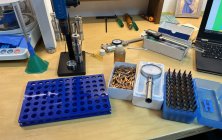
For anyone interested in what I meant by a spacer under the case so the inline die sits on the shoulder, you can see it in my pictures here:


You can also see the tool I made using a forester micrometer seater sleeve, a bushing and bullet stem I turned, and a dial indicator. You push the case in until it stops, the bullet stem attached to the dial indicator gets pushed up by the bullet and gives you an ogive to shoulder measurement.
 

Upgrades & Donations

This Forum's expenses are primarily paid by member contributions. You can upgrade your Forum membership in seconds. Gold and Silver members get unlimited FREE classifieds for one year. Gold members can upload custom avatars.


Click Upgrade Membership Button ABOVE to get Gold or Silver Status.

You can also donate any amount, large or small, with the button below. Include your Forum Name in the PayPal Notes field.


To DONATE by CHECK, or make a recurring donation, CLICK HERE to learn how.

Forum statistics

Threads
168,919
Messages
2,265,056
Members
81,648
Latest member
dburr26
Back
Top