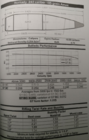
As Donovan says, they're not the same, tip material and 3gn aside, at least according to Bryan Litz and his various books of words (or more precisely his scale drawings and measurements) on bullet design and performance.
The 108 ELD is slightly longer overall than the AMax according to Mr Litz's measurements, has a longer tail section, and a slightly shorter bearing surface length / shank. The ELD nose length is a little longer, but the radius values are pretty close.
A 3gn weight change, less than 3%, doesn't necessarily need or imply a longer bullet - it can come from a small increase or decrease in the lead core's length or that of the jacket employed.
The relevant bits are:
Tail section: both 8-deg angle, but the ELD 0.164" v AMax 0.135"
Shank: ELD comes out at 0.397" length v AMax 0.429"
Nose: ELD measures 0.691" and AMax 0.658 (that may be down to tip shape changes rather than profile)
Nose radius: ELD 9.60 calibres v AMax 10.09 calibres
Rt/R value: ELD 0.91 v AMax 0.88 (ie both models much closer to tangent ogive form than secant / VLD)
Form factor: ELD is 0.975 v AMax 1.010 (ie the ELD generates 2.5% less drag than the G7 reference projectile and the AMax 1% more)
G7 BC value: ELD 0.268 and AMax 0.252 mostly coming from the form factor reduction rather than the extra 3gn weight.
Given the difficulty in measuring some parts of bullets and that Bryan has changed his measurement methodology between his early work on bullet design including the Amax and his recent investigations, small changes are best ignored, especially as there may be say 10 thou' variances between production lots, but the tail and shank changes are probably large enough to say 'modest redesign' rather than production or measurement induced factors.
I'd been intrigued by some of the high G7 BC values claimed by Hornady for the ELD bullets (in all calibres not just 243). So when I received my copy of the third edition of Bryan Litz's Ballistic Performance of Rifle Bullets, one of the first things I checked out was whether Hornady's claims are accurate - they are - and also whether the ELDs were AMax shape designs with a new tougher tip or something more. Where a comparison can be done (some can't) it seems that a few ELDs are the same shape as their predecessors, but some have seen a considerable redesign. The 243 123gn ELD is a very different design from the the same weight AMax for example, so any COAL measurements based on where the AMax touches the lands will be well out for the ELD.
Intriguingly, one or two ELDs (the 162gn 284 version stands out here) have a noticeably better form factor hence BC despite very small shape changes. That suggests Hornady's AMax melting-in-flight plastic tip claim is valid despite many people on forums rubbishing it as marketing hype.
The same / different 'form' issue also applies to members of Sierra's HPBT MatchKing range. Some models are no different to the SMKs of yesteryear, pointed meplats aside, whilst others have seen a major redesign. For instance, anybody who loads 123gn 0.264 MatchKings will see a large difference between the 'new' pointed version and what they had in the past so 'historic' COAL settings will be very wrong. Mixing 'old' and 'new' wouldn't be a good idea either even if their loads and seating depths still work given some significant BC differences.